
Short answer: a 1969–1973 Mustang Mach 1 is worth roughly $35,000–$45,000 for a 1971–1973 small-block car and about $75,000 on average for a 1969–1970 car, with documented 428 Cobra Jet examples asking as much as $130,000. A Boss 302 averages about $94,000, a one-year Boss 351 about $80,000, and the Boss 429 sits in a tier of its own at roughly $330,000. At RK Motors, the Boss cars sell far out of proportion to how many Ford built: we’ve sold one Boss 302 for roughly every 250 produced, compared with one 1969–1970 Mach 1 for roughly every 3,300.
This is the companion to our Shelby hub, RK Knows: Shelby Mustangs. Shelby gets the headlines, but Ford’s own in-house performance Mustangs, the Mach 1, Boss 302, Boss 351, and Boss 429, are just as central to RK Motors’ business. We’ve sold 83 of them from the 1969–1973 model years, more than the 58 Shelby GT350s and GT500s in our Shelby guide. This piece compares them on how they sell at RK Motors and how well they hold value, puts stock and restomod pricing side by side, and walks through how to verify a real Boss, backed by RK Motors’ own sold history and current public market benchmarks.
What RK Motors’ Own Sales Data Shows
RK Motors’ public sold archive currently lists 83 Mach 1 and Boss Mustangs from the 1969–1973 model years. Broken down by model and year:
| Model | 1969 | 1970 | 1971 | 1972 | 1973 | Total sold by RK Motors | Share of total |
|---|---|---|---|---|---|---|---|
| Mach 1 | 25 | 9 | 1 | 1 | 0 | 36 | 43% |
| Boss 302 | 6 | 28 | — | — | — | 34 | 41% |
| Boss 351 | — | — | 9 | — | — | 9 | 11% |
| Boss 429 | 3 | 1 | — | — | — | 4 | 5% |
| Total | 34 | 38 | 10 | 1 | 0 | 83 | 100% |
Here’s what that data tells us:
- Boss cars sell far beyond their share of production. Ford built about 213,000 Mach 1s from 1969 through 1973, compared with roughly 11,800 Boss Mustangs of all three types. The Boss cars are about 5% of that combined production, yet they account for 47 of our 83 sales, or 57%.
- 1969 is the Mach 1 year. The 1969 model year produced 25 of our 36 Mach 1 sales (69%), even though it represents only about a third of total 1969–1973 Mach 1 production. It’s the first-year car and the purest version of the original design.
- The 428 Cobra Jet drives the factory-correct Mach 1 market. Of the 24 factory-style (non-restomod) Mach 1s we’ve sold, 16, or 67%, were 428 Cobra Jet or Super Cobra Jet cars. The rest were five 351s and three 390s.
- Boss 302 sales track production almost exactly. 28 of our 34 Boss 302s (82%) are 1970 cars, nearly identical to 1970’s 81% share of total Boss 302 production (7,013 of 8,641).
- Documentation leads the Boss 302 listings. 16 of our 34 Boss 302 listings led with “Documented” in the headline, eight with “numbers matching,” and six cited show awards or Mustang Club of America (MCA) judging results, including three-time MCA Thoroughbred Gold cars.
- Restomods are a smaller, shrinking share of this segment. Restomods and pro touring builds make up 15 of our 83 sales (18%): 12 Mach 1s and three Boss 302s. But only one of our 15 most recent Mach 1 and Boss sales was a restomod (7%), compared with 14 of the 68 sales before that (21%). That’s the opposite of what we saw in our C3 Corvette guide, where restomods are the fastest-growing part of the business.
- Many of these cars come back. At least eight cars appear in our archive more than once, with identical listing headlines, a sign of cars returning to RK Motors for resale. Among them are a 43,223-mile 1970 Mach 1 428 Cobra Jet, an R-code 1969 Mach 1, and two Boss 351s.
Methodology note: counts come from RK Motors’ public sold-inventory listings for 1969–1973 Ford Mustangs as of October 2026, and reflect listings, so a car sold more than once is counted each time. Model, engine, and “restomod” classifications are based on each listing’s published headline and model designation. “Most recent” is based on listing order in the archive. Production figures are Ford’s commonly published totals.
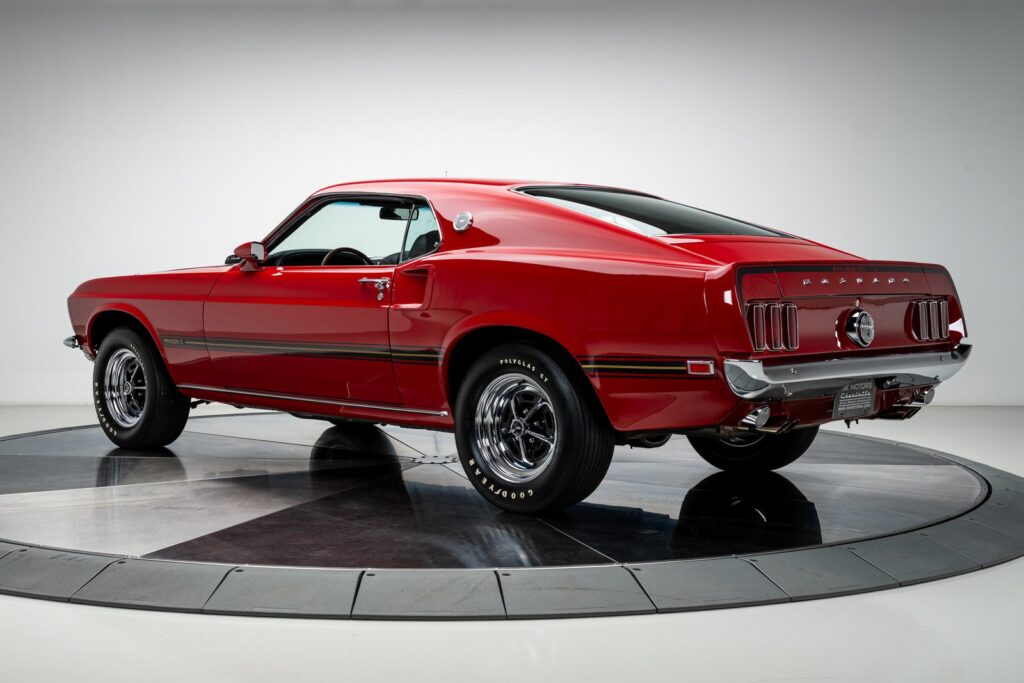
Mach 1 vs. Boss 302 vs. Boss 429: How Fast They Sell and How Well They Hold Value
RK Motors doesn’t publish final sale prices or time-to-sale for sold cars, so we measure demand two ways: how often we sell each model relative to how many Ford built, and how often each one shows up in our most recent sales. For value, we use CLASSIC.COM’s recorded sales, including the full range from the lowest to the highest recorded result.
| Model | Ford production | Sold by RK Motors | One RK sale per… | Share of RK’s 15 most recent | CLASSIC.COM average sale price | Lowest to top recorded sale |
|---|---|---|---|---|---|---|
| Mach 1 (1969–1970) | 113,428 | 34 | ~3,300 built | 6 | $75,327 (446 sales) | $6,300–$440,000 |
| Mach 1 (1971–1973) | 99,614 | 2 | ~49,800 built | 0 | $41,890 (Market Benchmark) | — |
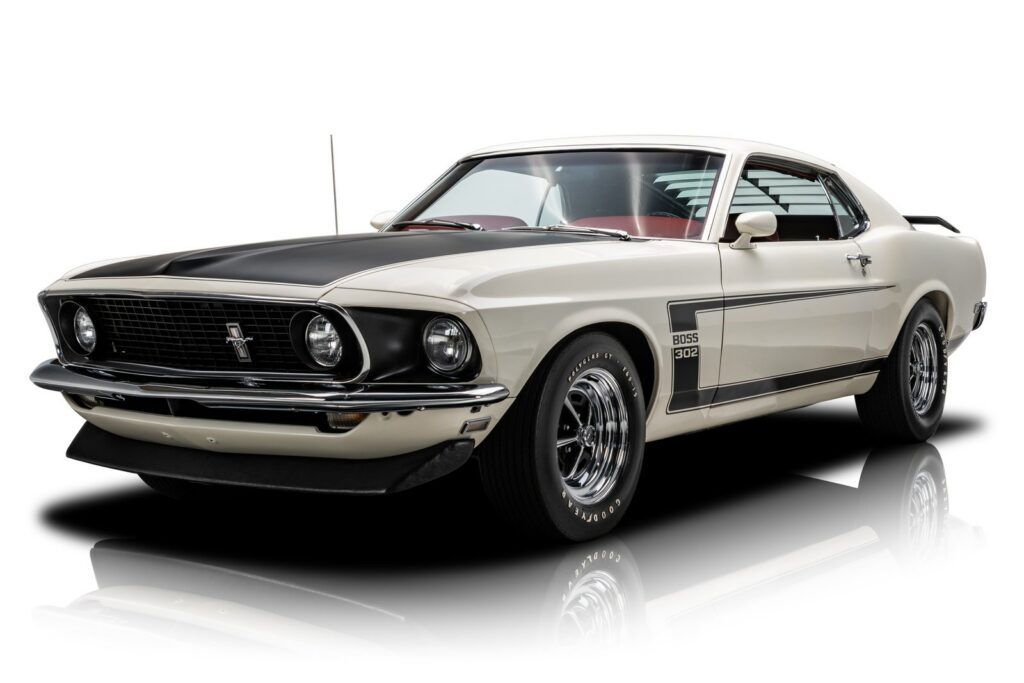
| Boss 302 (1969–1970) | 8,641 | 34 | ~250 built | 4 | $93,758 (199 sales) | $34,000–$258,500 |
| Boss 351 (1971) | 1,806 | 9 | ~200 built | 5 | $79,890 (56 sales) | $25,000–$198,000 |
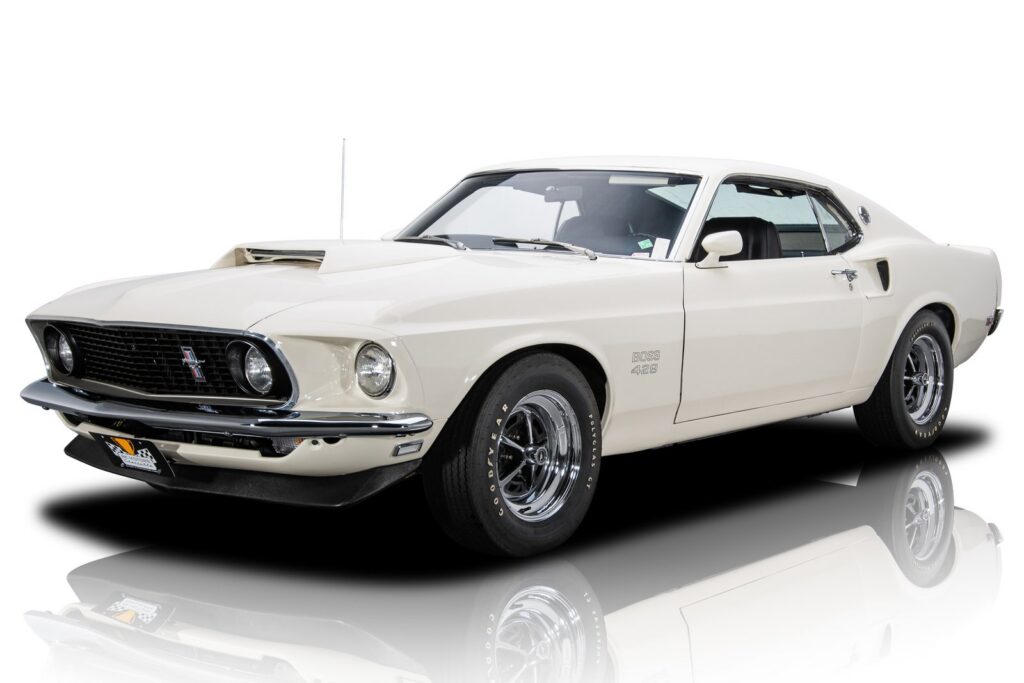
| Boss 429 (1969–1970) | ~1,358 | 4 | ~340 built | 0 | $330,891 (84 sales) | $159,500–$627,000 |
Here’s how the three headline cars compare:
- Boss 302: the steadiest seller. Relative to production, RK Motors sells a Boss 302 about 13 times as often as a 1969–1970 Mach 1. It has the deepest public market of the three Boss cars (199 recorded CLASSIC.COM sales), and documented, judged cars reach well into six figures.
- Mach 1: the volume car, priced by its engine. The Mach 1 has the widest value range of any car in this group, from $6,300 to $440,000. That spread is mostly about what’s under the hood. A 428 Cobra Jet car and a base small-block car share a name, but not a market, which is why verifying the engine code matters so much.
- Boss 429: the best value retention, the thinnest market. The lowest recorded Boss 429 sale on CLASSIC.COM, $159,500, is more than double the average Mach 1. But with roughly 1,358 built, Boss 429s rarely change hands. We’ve sold four, and none in our last 15 Mach 1 and Boss sales.
- Boss 351: the sleeper. Built for 1971 only, the Boss 351 accounts for five of our 15 most recent sales despite only nine total. Its CLASSIC.COM Market Benchmark of $74,855 sits below the Boss 302 and close to the 1969–1970 Mach 1 average.
- 1971–1973 Mach 1: the entry point. The later, larger Mach 1s benchmark at $41,890, about 55% of the 1969–1970 average. We’ve sold only two, which says more about where collector demand is focused than about the cars themselves.
The Mach 1 and Boss Price Ladder: What Each Tier Is Worth Right Now
Like the Corvette and Shelby markets, the Mach 1 and Boss market is best understood as a ladder. Each rung is defined mainly by model, engine code, and documentation. Benchmarks below are CLASSIC.COM average sale prices, Market Benchmark values, and current listings as of October 2026. They represent typical good examples; tired drivers trade below them and judged, documented cars above.
| Rung | What it is | Current market benchmark |
|---|---|---|
| 1. Later Mach 1s | 1971–1973 Mach 1 with 302 or 351 Cleveland V8s | ~$34,000–$42,000 (Market Benchmark $41,890) |
| 2. Early small-block and 390 Mach 1s | 1969–1970 Mach 1 with 351 Windsor, 351 Cleveland, or 390 V8s | Typically below the $75,327 average for all 1969–1970 Mach 1s |
| 3. Boss 351 | 1971 only, 1,806 built | ~$75,000–$80,000 (benchmark $74,855; average $79,890) |
| 4. Boss 302 | 1969–1970, 8,641 built | ~$87,000–$94,000 (benchmark $86,978; average $93,758) |
| 5. 428 Cobra Jet Mach 1s | 1969–1970 Q-code and R-code Cobra Jet and Super Cobra Jet cars | Current listings ~$80,000–$130,000, documented R-code cars at the top |
| 6. Pro-built restomods | Modern drivetrain and chassis on a 1969–1970 body | ~$99,000–$101,000 (1969–1970 custom Mustang average and benchmark); Mach 1 builds listed up to ~$180,000 |
| 7. Boss 429 | 1969–1970, about 1,358 built | ~$331,000 (benchmark $331,091; recorded sales $159,500–$627,000) |
Rung 1: 1971–1973 Mach 1
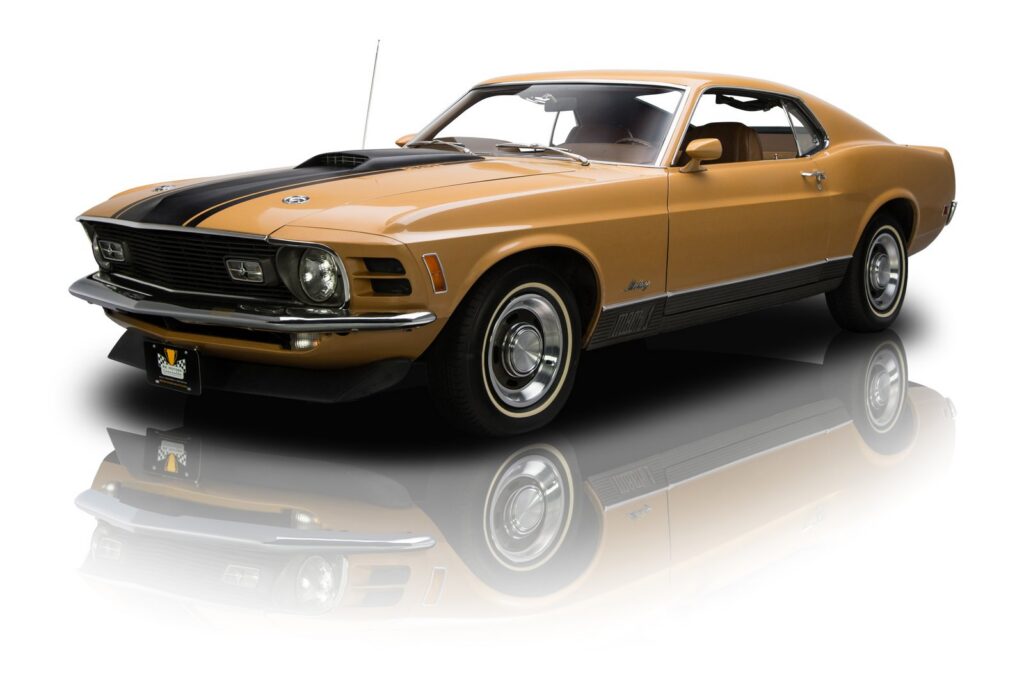
For 1971, the Mustang grew longer, wider, and heavier, with a nearly flat SportsRoof. The Mach 1 continued with a 302 as standard and 351 Cleveland options, plus the 429 Cobra Jet and Super Cobra Jet for 1971 only. CLASSIC.COM benchmarks the 1971–1973 Mach 1 at $41,890, and a recent sample of 1972 sales ranged from $17,000 to $62,700. RK Motors has sold two: a frame-up restored 1971 Mach 1 351 4-speed and a 1972 Mach 1 351 Cobra Jet 4-speed. For buyers who want the Mach 1 name and look at the lowest entry price, this is the rung.
Rung 2: 1969–1970 small-block and 390 Mach 1s
The 1969 Mach 1 came standard with a 351 Windsor, with the 351 four-barrel, the 390 S-code, and the 428 Cobra Jet as options. For 1970, the 351 Cleveland took over. These cars make up most of the 446 recorded CLASSIC.COM sales behind the $75,327 average, and condition and originality separate them more than anything else. Our sold examples include a one-owner 1970 Mach 1 351 with 50,237 actual miles, an authentic 1970 Mach 1 351 Cleveland 4-speed, and a frame-off restored 1969 Mach 1 390 4-speed.
Rung 3: Boss 351
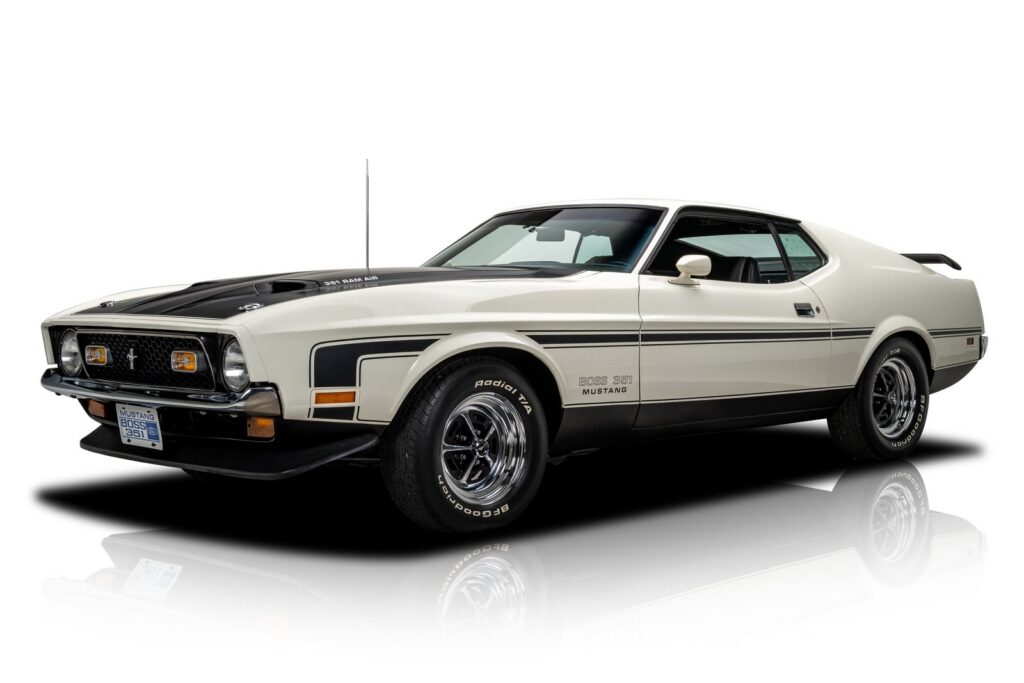
The Boss 351 was built for 1971 only, with a high-output 351 Cleveland rated at 330 horsepower, a four-speed manual as the only transmission, and a 3.91 Traction-Lok rear end. Just 1,806 were built. CLASSIC.COM benchmarks it at $74,855 with an average sale of $79,890, below the Boss 302 but with a top recorded sale of $198,000. It’s become one of our most consistent recent sellers, including this documented 1971 Boss 351 with an Elite Marti Report.
Rung 4: Boss 302
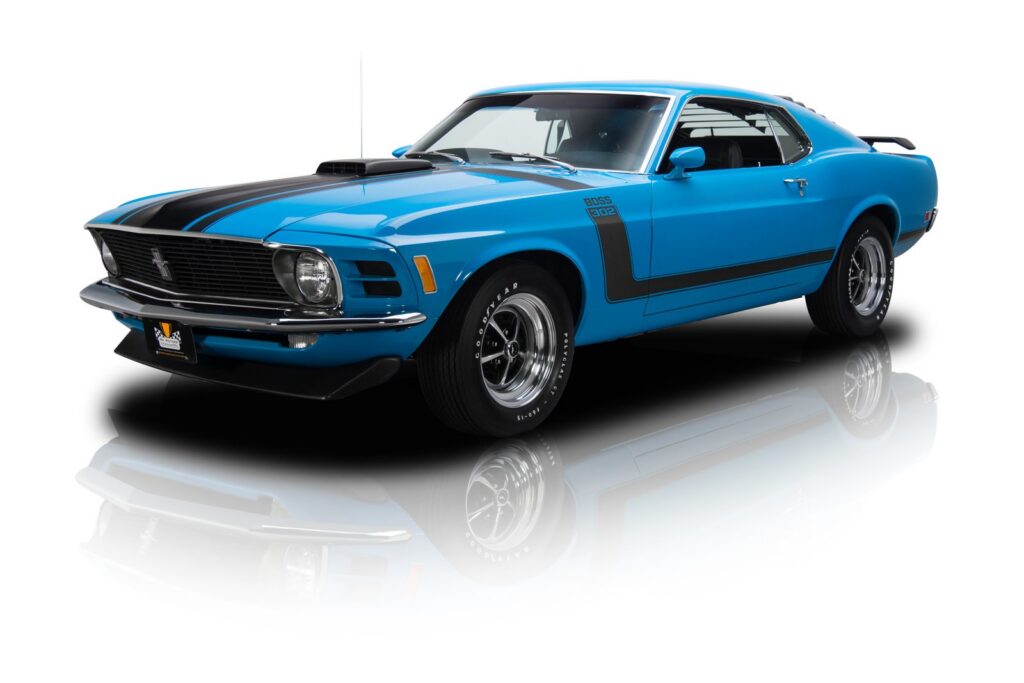
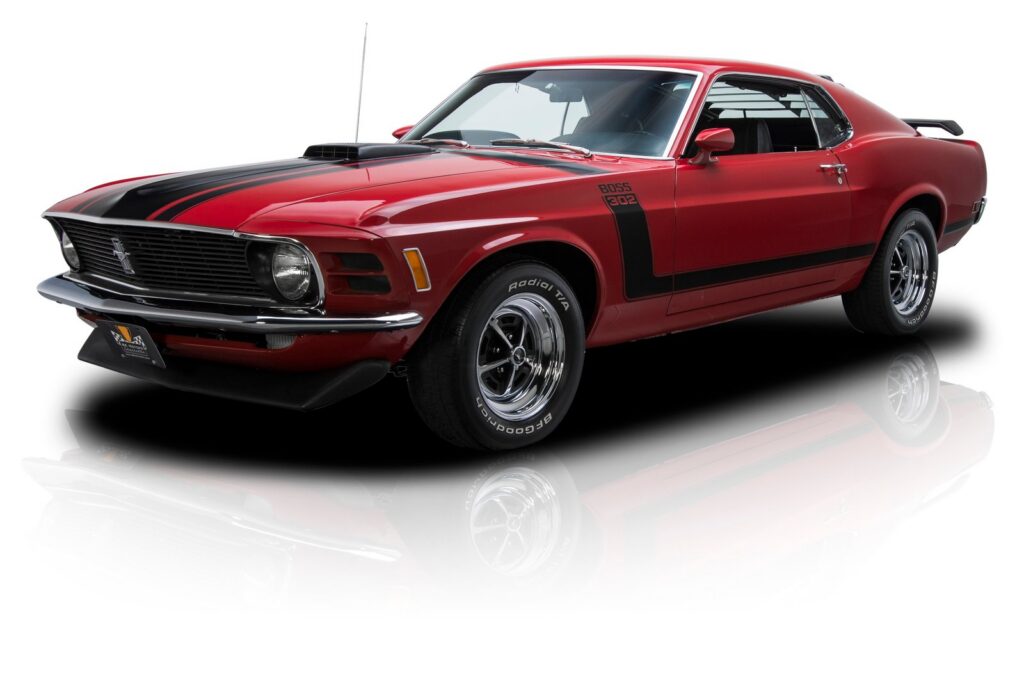
Ford built the Boss 302 to qualify the Mustang for SCCA Trans-Am racing. It paired a high-revving 302 rated at 290 horsepower with a four-speed only, a competition suspension, and Larry Shinoda’s graphics. Production jumped from 1,628 in 1969 to 7,013 in 1970. CLASSIC.COM benchmarks the Boss 302 at $86,978, with an average sale of $93,758 and a top recorded sale of $258,500.
It’s the Boss RK Motors knows best. Our 34 sales include a three-time MCA Thoroughbred Gold 1970 Boss 302, an MCA Concours Gold numbers-matching 1970 Boss 302, a 1970 Boss 302 that scored 689 of 700 points in MCA judging, and a low-mile 1969 Boss 302 sold new at Tasca Ford with a Deluxe Marti Report and full ownership history.
Rung 5: 428 Cobra Jet Mach 1s
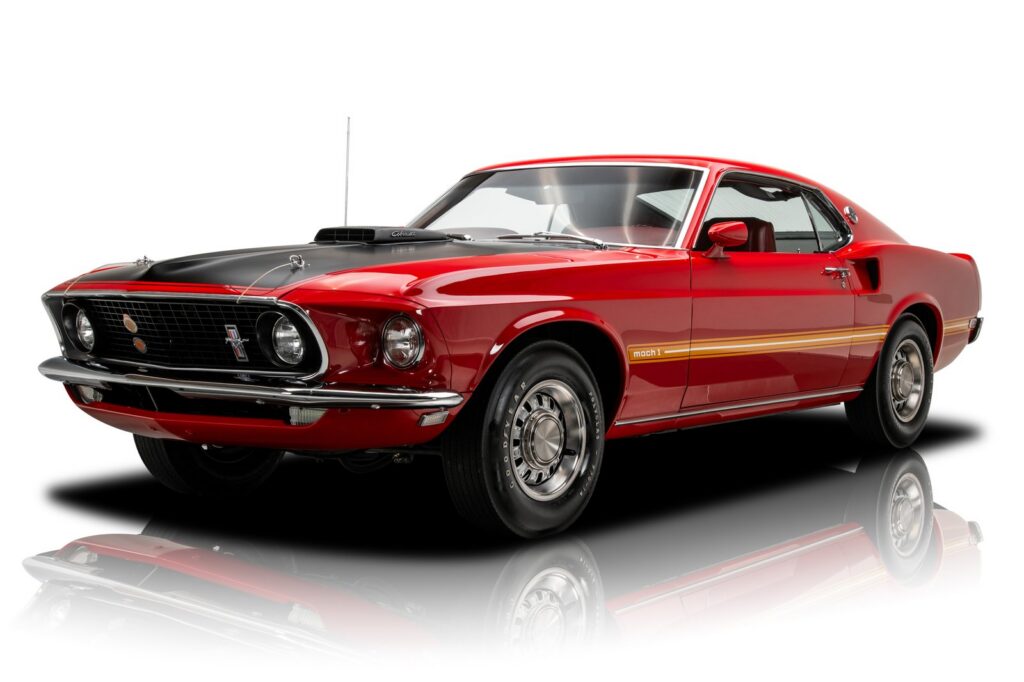
The 428 Cobra Jet turned the Mach 1 into a true big-block muscle car. Q-code cars had the standard Cobra Jet; R-code cars added Ram Air through the Shaker hood scoop. Ordering the Drag Pack with a 3.91 or 4.30 axle made it a Super Cobra Jet. Current CLASSIC.COM listings run from about $80,000 to $130,000, with documented R-code and Super Cobra Jet cars at the top.
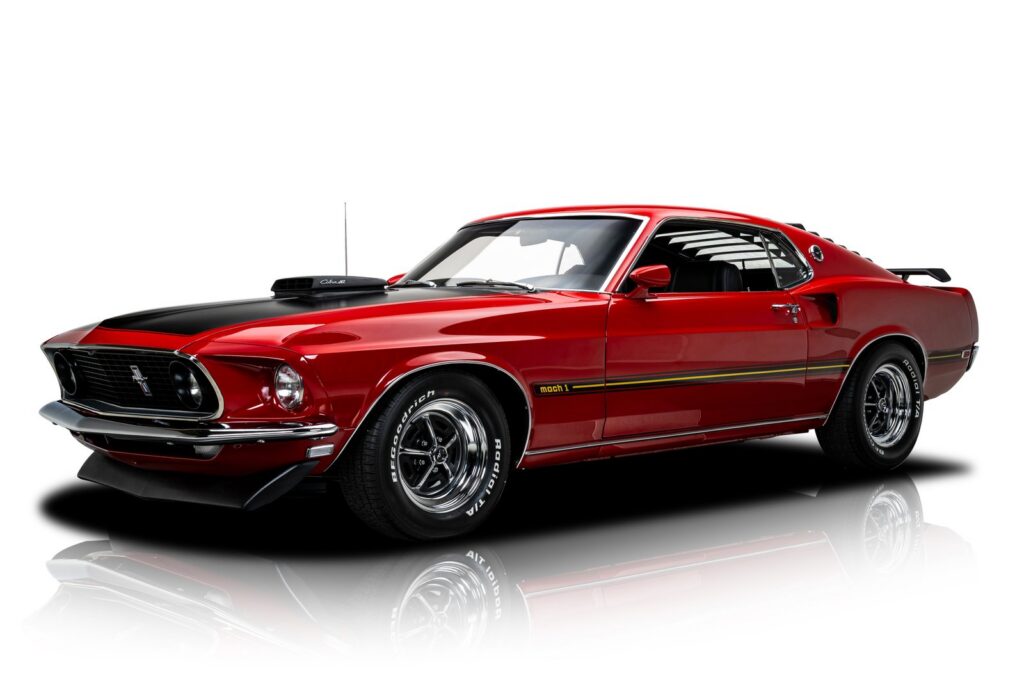
This is the heart of RK Motors’ Mach 1 business: 16 of our 24 factory-style Mach 1 sales, and four of our six most recent Mach 1 sales. Examples include a ground-up restored 1969 Mach 1 428 Super Cobra Jet sold new in Charlotte, a 1970 Mach 1 428 Super Cobra Jet 4-speed with a 4.30 Drag Pack, and a 43,223-mile 1970 Mach 1 428 Cobra Jet 4-speed.
Rung 6: Professionally built restomods
As with every restomod, pricing depends far more on the builder, chassis, and finish than on the donor car, as we covered in The Builder Signature Premium. CLASSIC.COM’s 1969–1970 custom Mustang market averages $99,042, and current Mach 1-based builds are listed from about $98,000 to $180,000. See the stock vs. restomod comparison below for how that stacks up against original cars.
Rung 7: Boss 429
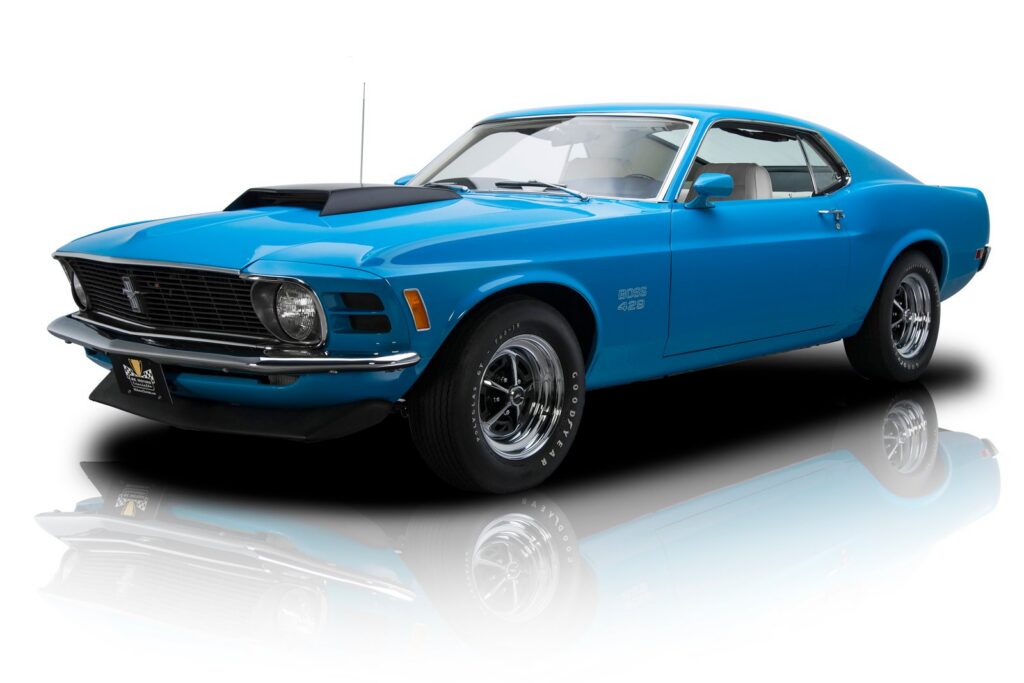
The Boss 429 existed to homologate Ford’s 429 semi-hemi engine for NASCAR. Ford sent the cars to Kar Kraft in Brighton, Michigan, where the front suspension and shock towers were reworked to fit the huge engine, and each car received a Kar Kraft (“KK”) number. Roughly 1,358 were built in total, 499 of them 1970 models. CLASSIC.COM benchmarks the Boss 429 at $331,091, with recorded sales from $159,500 to $627,000. RK Motors has sold four, including KK 1746, a documented, numbers-matching 1969, a frame-up restored 1969, and KK 2153, a concours-restored Grabber Blue 1970.
Stock vs. Restomod: What a Modern Build Does to Price
The restomod question works differently on these cars than on most muscle cars, because the right engine code can be worth more than any build. Here’s how factory-correct benchmarks compare with CLASSIC.COM’s 1969–1970 custom Mustang market:
| Car | Factory-correct benchmark | Restomod / custom benchmark | What it means |
|---|---|---|---|
| 1969–1970 Mach 1 (all engines) | $75,327 average (446 sales) | $99,042 average; $100,569 benchmark | A professionally built car runs about 31% above the average original Mach 1 |
| 1969–1970 428 Cobra Jet Mach 1 | ~$80,000–$130,000 (current listings) | ~$99,000–$101,000 | A documented Cobra Jet is often worth as much or more as an original; the best donor cars are non-Cobra Jet Mach 1s |
| Boss 302 | $93,758 average; top sale $258,500 | ~$99,000–$101,000 | A build adds little over an average original and gives up the upside of a judged, documented car |
| Boss 429 | $330,891 average; lowest sale $159,500 | ~$99,000–$101,000 | Modifying a real Boss 429 costs far more value than a build can add. These cars should stay original |
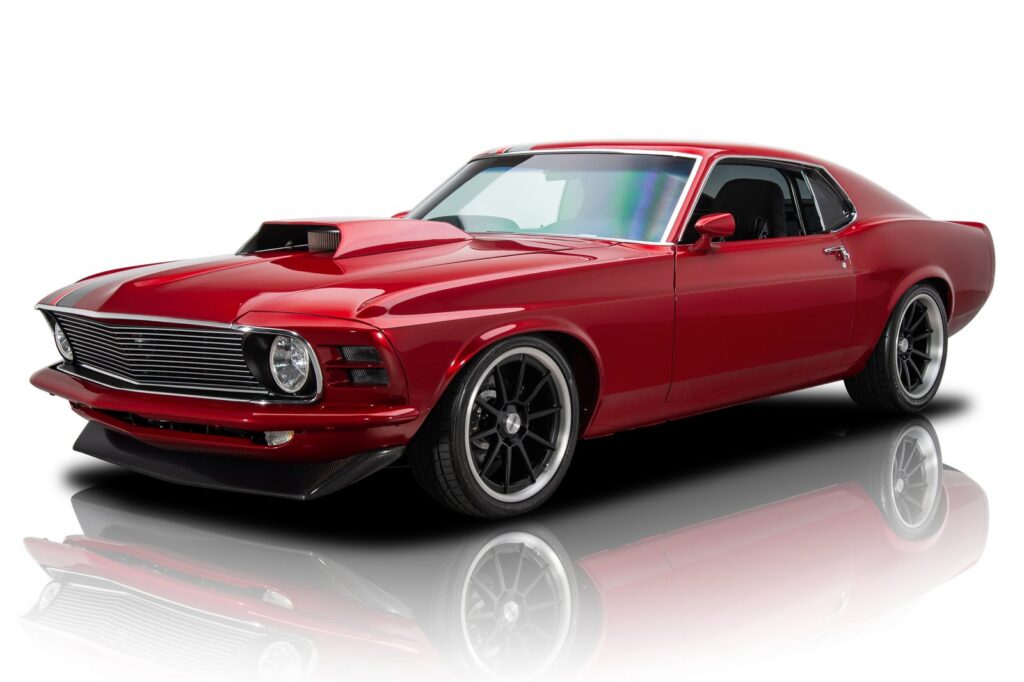
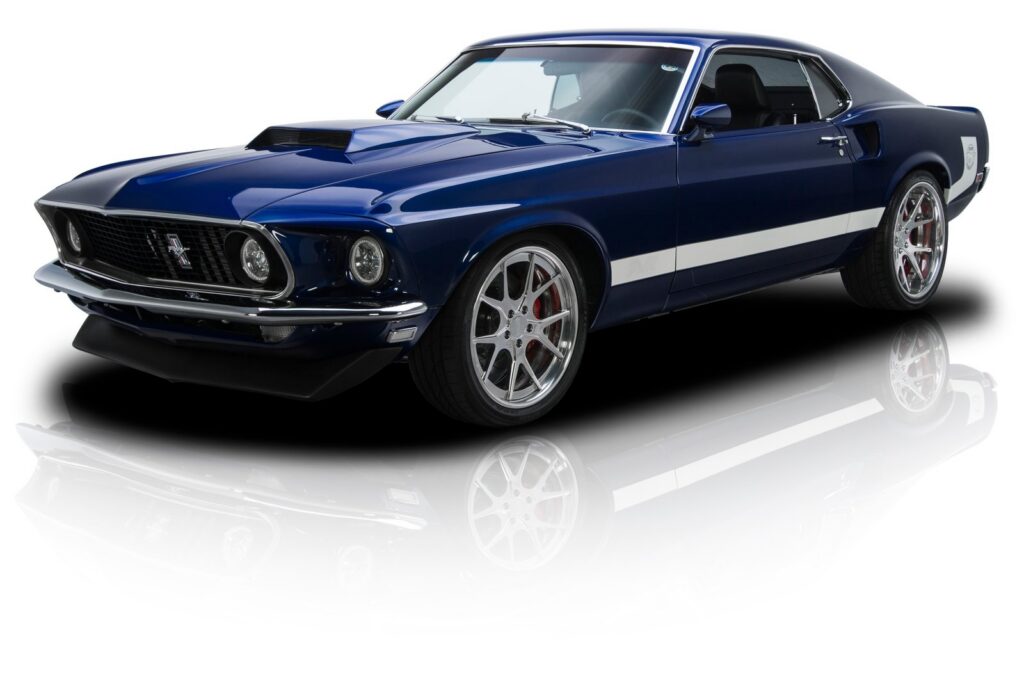
RK Motors’ own sales follow the same logic. Of the 15 restomods and pro touring builds in our Mach 1 and Boss sales, 12 started as Mach 1s and only three as Boss 302s. We’ve never sold a modified Boss 429. One of our recent builds shows the right approach: this 1969 Mach 1 restomod began life as an S-code 390 car before gaining a 428 Cobra Jet, a five-speed, air conditioning, and coilovers. Other Mach 1-based builds we’ve sold include a 1970 Mach 1 with a 912-horsepower Kaase Boss 600ci V8 and an award-winning 1969 pro touring build with a supercharged 5.0L Aluminator V8 that was featured at SEMA in 2014.
If you’re weighing the two paths, our articles on original vs. better-than-original and restomod or original go deeper.
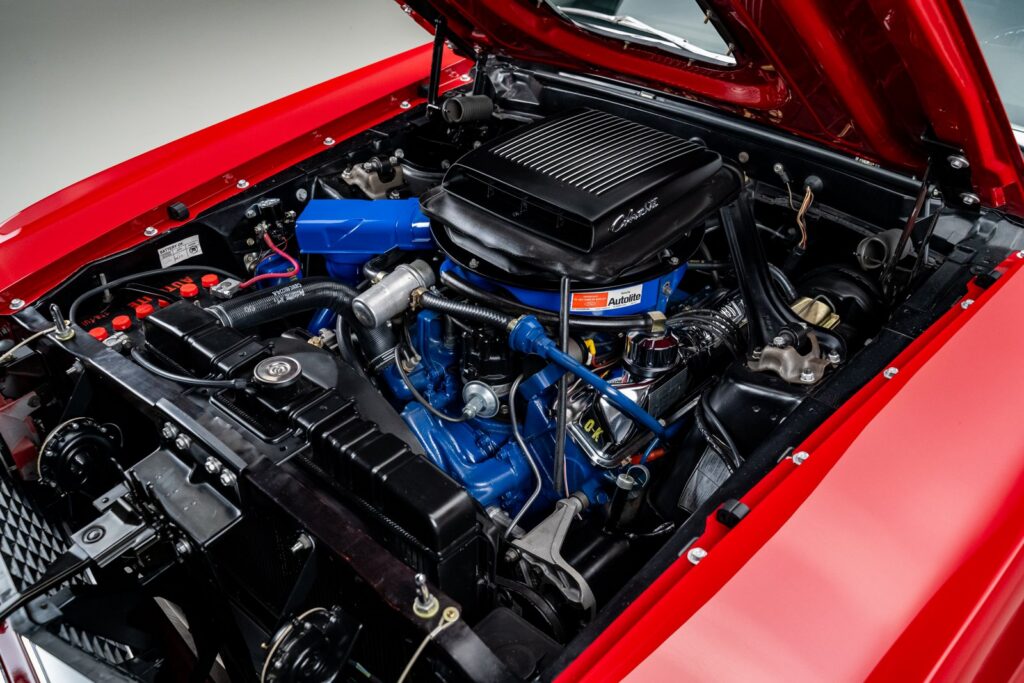
How to Verify a Real Boss (and a Real Cobra Jet Mach 1)
A Boss 429 is worth about three and a half times a Boss 302 and more than four times an average Mach 1, so the badge alone proves nothing. Boss-styled tributes and clones are common, and plenty of honest custom builds wear Boss names too. RK Motors has sold several, such as this 1970 Mustang “Boss 520” pro touring build with a Jon Kaase Boss Nine V8, marketed clearly as what they are. Here’s how to tell a real car from a look-alike.
Step 1: Decode the VIN
Every 1969–1973 Mustang has an 11-character VIN: model year, assembly plant, body code, engine code, and a six-digit sequence number. The fifth character, the engine code, is the single fastest check.
| Car | VIN should read | What to look for |
|---|---|---|
| Boss 302 (1969–1970) | 9F02G… or 0F02G… | “G” engine code. Some 1970 cars were built at Metuchen and carry a “T” plant code (0T02G…) |
| Boss 429 (1969–1970) | 9F02Z… or 0F02Z… | “Z” engine code and “F” for Dearborn |
| Boss 351 (1971) | 1F02R… | “R” engine code, the 1971 Boss 351 |
| 1969 Mach 1 | 9_02_… | Shares the “02” fastback body code with other 1969 SportsRoofs; confirm Mach 1 on the door data plate and Marti Report |
| 1970–1973 Mach 1 | _ _05_… | “05” is the Mach 1 body code |
| 428 Cobra Jet (1969–1970) | Engine code Q or R | “R” means Ram Air; “Q” is the non-Ram Air Cobra Jet |
| 429 Cobra Jet (1971) | Engine code C or J | “J” is the Super Cobra Jet Ram Air |
Step 2: Match the door data plate and hidden VINs
The door data plate records the body style, paint, trim, build date, District Sales Office, axle, and transmission codes, and all of it should agree with the VIN. Look for original rosette-style rivets on the dash VIN plate, and confirm that the hidden VIN stampings on the body match the dash plate exactly. On a car sold as numbers-matching, the engine and transmission markings should also line up with the car’s build, as we explain in Why Numbers-Matching Still Matters More Than Ever.
Step 3: Order a Marti Report
Marti Auto Works holds the license to Ford’s original production records for 1967 and later vehicles. Run a VIN, and the Marti Report confirms how that car was built: engine, transmission, axle, paint, trim, options, build date, District Sales Office, and, at higher report levels, the selling dealer, production statistics, and a reproduction window sticker and door tag. Reports come in Standard, Deluxe, and Elite levels. Many of the cars we’ve sold carry one, including this 1969 Boss 302 with a Deluxe Marti Report and 1970 Boss 302 and 1971 Boss 351 with Elite Marti Reports.
One caution: a Marti Report confirms how a VIN was built, not that the car in front of you is still that car. It’s most powerful when paired with a physical inspection of the VIN plate, data plate, and hidden stampings.
Step 4: Check the Boss-specific hardware
- Boss 302: a “G” code VIN, a four-speed manual (no automatic was offered), competition suspension, and on 1970 cars, a rev limiter.
- Boss 429: a Kar Kraft “KK” number (the series started at KK 1201), the reworked shock towers and inner fender aprons Kar Kraft added to fit the engine, and a genuine Boss 429 block. The cars we’ve sold include KK 1746 and KK 2153.
- Boss 351: an “R” code VIN, a four-speed manual, and a 3.91 Traction-Lok rear end.
- Cobra Jet Mach 1: a “Q” or “R” code VIN, and on Super Cobra Jet cars, the Drag Pack axle ratio (3.91 or 4.30) on the data plate.
Step 5: Follow the paper trail and judging history
Window stickers, dealer invoices, build sheets, and an unbroken ownership history all support a Marti Report. Mustang Club of America judging, from Concours to Thoroughbred Gold, adds an independent expert opinion. Judged, documented cars sit at the top of the Boss 302 market.
Which Mach 1 and Boss Years Hold Value Best
- 1969: the first year of the Mach 1, Boss 302, and Boss 429, and the source of 11 of our 16 factory 428 Cobra Jet Mach 1 sales. It accounts for 34 of our 83 sales (41%), including 25 of our 36 Mach 1s.
- 1970: the biggest Boss 302 year and the final Boss 429 year, with the 428 Cobra Jet still available in the Mach 1. It’s our busiest model year, with 38 of 83 sales (46%).
- 1971: the one-year Boss 351 and the only year of the 429 Cobra Jet Mach 1. The Boss 351 has become a strong recent seller.
- 1972–1973: the most affordable Mach 1s, benchmarking around $42,000. The best of them are well-documented 351 Cobra Jet cars and low-mile originals.
What Moves a Mach 1 or Boss Up or Down the Ladder
- Model and engine code: the gap between a 1971–1973 Mach 1 and a Boss 429 is nearly $290,000 at benchmark, and it only holds if the VIN and hardware are real.
- Documentation: Marti Report, window sticker, dealer invoice, build sheet, Kar Kraft records, and ownership history.
- Judging results: MCA Concours and Thoroughbred Gold awards mark the top of the factory-correct market.
- Originality and mileage: numbers-matching drivetrains and documented low miles separate good cars from great ones.
- Options: the Drag Pack, Shaker hood, four-speeds, Magnum 500 wheels, and rear spoiler and window slats all matter on correct cars.
- Build quality (restomods): the builder’s reputation, chassis, and fit and finish matter more than the donor car, as long as the donor wasn’t a real Boss or Cobra Jet.
Frequently Asked Questions
What is a Mach 1 worth right now?
Most 1969–1970 Mustang Mach 1s sell for around $75,000 in 2026, based on CLASSIC.COM’s average of $75,327 across 446 recorded sales. Small-block cars usually trade below that, while documented 428 Cobra Jet and Super Cobra Jet cars are listed from about $80,000 to $130,000. The later 1971–1973 Mach 1 benchmarks around $42,000.
What is a Boss 302 worth?
CLASSIC.COM benchmarks the 1969–1970 Boss 302 at $86,978, with an average sale price of $93,758 across 199 recorded sales. Recorded sales range from $34,000 to $258,500, with documented, MCA-judged cars at the top.
What is a Boss 429 worth?
The Boss 429 benchmarks at $331,091 on CLASSIC.COM, with an average sale price of $330,891 across 84 recorded sales. Recorded sales range from $159,500 to $627,000.
What’s the difference between a Mach 1 and a Boss?
The Mach 1 was a high-volume performance and appearance package, offered with engines from a 302 or 351 up to the 428 Cobra Jet. The Boss cars were low-volume homologation specials: the Boss 302 for SCCA Trans-Am racing, the Boss 429 for NASCAR, and the 1971 Boss 351 as a high-output street car. Ford built about 213,000 Mach 1s from 1969 to 1973, compared with roughly 11,800 Boss Mustangs.
How do I verify a real Boss 302 or Boss 429?
Start with the VIN: a Boss 302 has a “G” engine code and a Boss 429 has a “Z” code, in the fifth position. Then confirm the door data plate, hidden VIN stampings, and Boss-specific hardware, such as the Boss 429’s Kar Kraft “KK” number and reworked shock towers. Finally, order a Marti Report to confirm how the VIN was originally built.
What is a Marti Report?
A Marti Report is a document from Marti Auto Works, which holds the license to Ford’s original production records for 1967 and later vehicles. Based on the VIN, it confirms the car’s original engine, transmission, axle, colors, options, build date, and sales district, and higher report levels add the selling dealer and production statistics.
Is a Mach 1 or Boss a good investment?
We’re not able to offer investment advice. What we can share is observable demand: Boss Mustangs are about 5% of combined Mach 1 and Boss production but 57% of RK Motors’ sales in this group, and the lowest recorded Boss 429 sale on CLASSIC.COM is more than double the average Mach 1. Anyone buying with investment in mind should treat a classic car as a discretionary purchase first and consult an independent financial advisor.
Is a Mach 1 restomod worth more than an original?
Usually more than an average original, but not more than a documented Cobra Jet. CLASSIC.COM’s 1969–1970 custom Mustang average of $99,042 is about 31% above the $75,327 average for all 1969–1970 Mach 1s. Documented 428 Cobra Jet cars are listed as high as $130,000, and real Boss cars should generally stay original.
How many Mach 1 and Boss Mustangs has RK Motors sold?
RK Motors’ public sold inventory currently lists 83 Mach 1 and Boss Mustangs from 1969–1973: 36 Mach 1s, 34 Boss 302s, nine Boss 351s, and four Boss 429s.
Does RK Motors ship Mach 1 and Boss Mustangs?
Yes. Every RK Motors listing can be shipped anywhere in the world, and each vehicle receives a comprehensive, multi-point inspection before it’s listed for sale.
Where can I see RK Motors’ current and sold Mustangs?
Browse all current Mustang inventory, or review past sales in our sold archive. For the Carroll Shelby side of the story, read RK Knows: Shelby Mustangs, and for the Mach 1’s biggest rival, read RK Knows: 1969 Chevrolet Camaro. If you own a Mach 1 or Boss and are thinking about selling, learn about consigning with RK Motors.
Market benchmarks: CLASSIC.COM Market Benchmark values, average sale prices, and recorded sales for the 1969–1970 Mach 1, 1971–1973 Mach 1, Boss 302, Boss 351, Boss 429, and 1969–1970 custom Mustang markets (October 2026). Marti Report details: Marti Auto Works, via CJ Pony Parts. Production figures: Ford. RK Motors data: public sold-inventory listings, October 2026.