
Short answer: a C3 Corvette (1968–1982) is worth anywhere from the mid-teens for a driver-quality late-’70s small-block coupe to $40,000–$85,000 for a strong chrome-bumper big-block, with the rare L89, LS6, ZR1, and L88 cars climbing from roughly $125,000 to well past $400,000. The dividing line that matters most is the bumper. Chrome-bumper cars built from 1968 through 1972 average roughly twice what the 1974–1982 rubber-bumper cars bring, and at RK Motors they make up nearly three out of every four C3s we’ve sold.
This is the next chapter in our Corvette generation series. It picks up where our C2 Corvette guide left off, builds on the generation-by-generation view in The Corvette Ladder, and puts the entire 15-year C3 run into one reference, backed by RK Motors’ own sold history and current public market benchmarks.
What RK Motors’ Own Sales Data Shows
RK Motors’ public sold archive currently lists 64 sold 1968–1982 Corvettes. Broken down by model year:
| Model year | C3 Corvettes sold by RK Motors | Share of total |
|---|---|---|
| 1968 | 11 (all 11 big-block cars) | 17% |
| 1969 | 17 | 27% |
| 1970 | 1 | 2% |
| 1971 | 5 | 8% |
| 1972 | 13 | 20% |
| 1968–1972 chrome-bumper subtotal | 47 | 73% |
| 1973 (rubber front, chrome rear) | 2 | 3% |
| 1974 | 3 | 5% |
| 1975 | 1 | 2% |
| 1976 | 0 | 0% |
| 1977 | 1 | 2% |
| 1978 | 2 (both Indy Pace Cars) | 3% |
| 1979 | 1 | 2% |
| 1980 | 3 | 5% |
| 1981 | 2 | 3% |
| 1982 | 2 | 3% |
| 1973–1982 subtotal | 17 | 27% |
| Total | 64 | 100% |
Here’s what that data tells us:
- Chrome bumpers dominate, far beyond their share of production. Chevrolet built 133,449 Corvettes from 1968 through 1972, about 25% of the roughly 542,000 C3s produced. Yet those years account for 47 of our 64 C3 sales, or 73%. Collector demand is concentrated almost three-to-one in the cars with less than a quarter of the supply.
- 1968 and 1969 are the core of the market. Those two years alone produced 28 of our C3 sales (44%). They’re the last years of the 427 and the purest expression of the original Mako Shark-inspired design.
- Big-blocks drive the factory-correct side. Of the 38 factory-style (non-restomod) chrome-bumper C3s we’ve sold, 28, or 74%, were big-block cars (427 or 454). Every 1968 C3 we’ve sold was a 427, and eight of our big-block C3s were 435-horsepower L71 or aluminum-head L89 cars.
- Documentation is common at the top. Nine of our sold C3 listings cited NCRS Top Flight, Bloomington Gold, Triple Diamond, or Duntov recognition in the headline alone, and 16 led with “numbers-matching.” Every one of those 16 numbers-matching cars was a big-block or an LT1.
- Rubber-bumper cars sell on originality and mileage. Nine of our 17 sold 1973–1982 cars headlined their actual mileage, and seven of those showed fewer than 20,000 miles, including a 42-mile 1978 Pace Car and a 5-mile 1979 L82. Big-blocks matter here too: four of the 17 were 1973–1974 big-block cars, the last big-block Corvettes Chevrolet built.
- Restomods are the fastest-growing part of our C3 business. Restomods and custom builds make up 13 of our 64 sold C3s (20%). But they account for 8 of our 15 most recent C3 sales (53%), compared with just 5 of the 49 sales before that (10%). The C3’s affordable entry price, separate frame, and big engine bay make it an ideal restomod platform, and our buyers have noticed.
Methodology note: counts come from RK Motors’ public sold-inventory listings for 1968–1982 Chevrolet Corvettes as of October 2026. “Restomod,” “big-block,” and mileage classifications are based on each listing’s published headline. “Most recent” is based on listing order in the archive. Production figures are Chevrolet’s published totals.
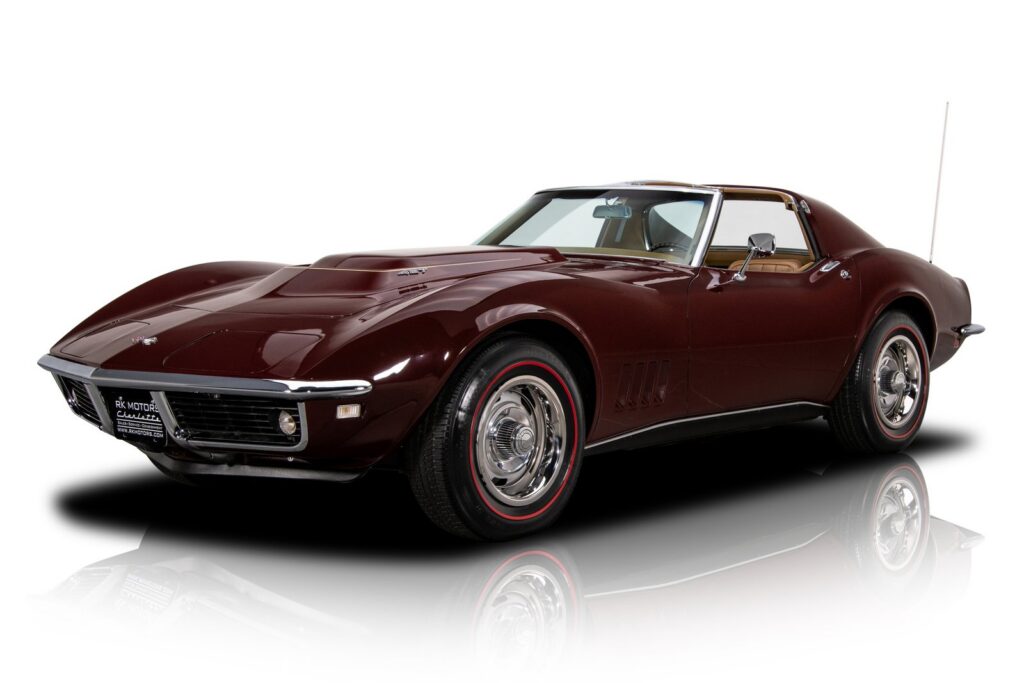
Chrome Bumper vs. Rubber Bumper: The Value Gap in Numbers
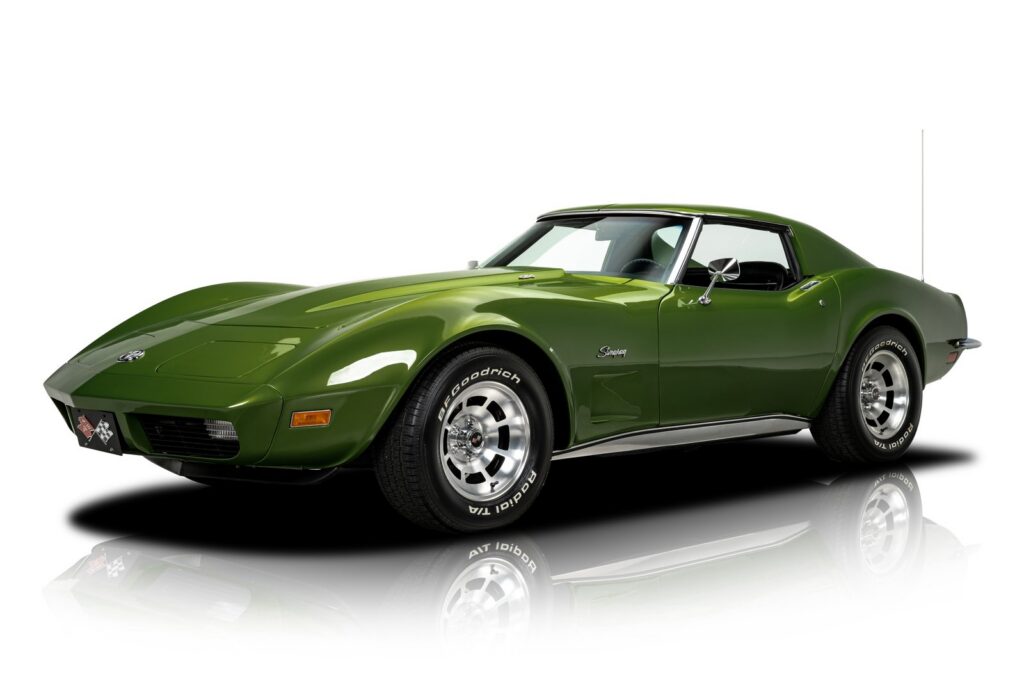
The C3’s styling changed in two steps. For 1973, Chevrolet replaced the chrome front bumper with a body-colored urethane nose to meet new 5-mph impact standards, while keeping the chrome rear bumper. For 1974, the rear went urethane too. Collectors treat 1968–1972 as the “chrome-bumper” era, with 1973 as a one-year transition car.
CLASSIC.COM’s average sale prices for standard-variant C3s show how wide the gap is:
| Model year | Bumper style | CLASSIC.COM average sale price | Recorded sales |
|---|---|---|---|
| 1968 | Chrome | $40,798 | 287 |
| 1969 | Chrome | $40,247 | 487 |
| 1970 | Chrome | $33,562 | 209 |
| 1971 | Chrome | $33,708 | 368 |
| 1972 | Chrome | $32,213 | 417 |
| 1973 | Transition | $25,883 | 325 |
| 1974 | Rubber | $20,815 | 273 |
| 1977 | Rubber | $15,735 | 221 |
| 1979 | Rubber | $14,390 | 171 |
| 1982 | Rubber | $17,301 | 232 |
Averaged together, the five chrome-bumper years come to about $36,100. The four rubber-bumper years in the table average about $17,100. That’s a premium of roughly 2.1x before options, engine codes, or documentation enter the picture. The 1968 average alone is about 2.8 times the 1979 average.
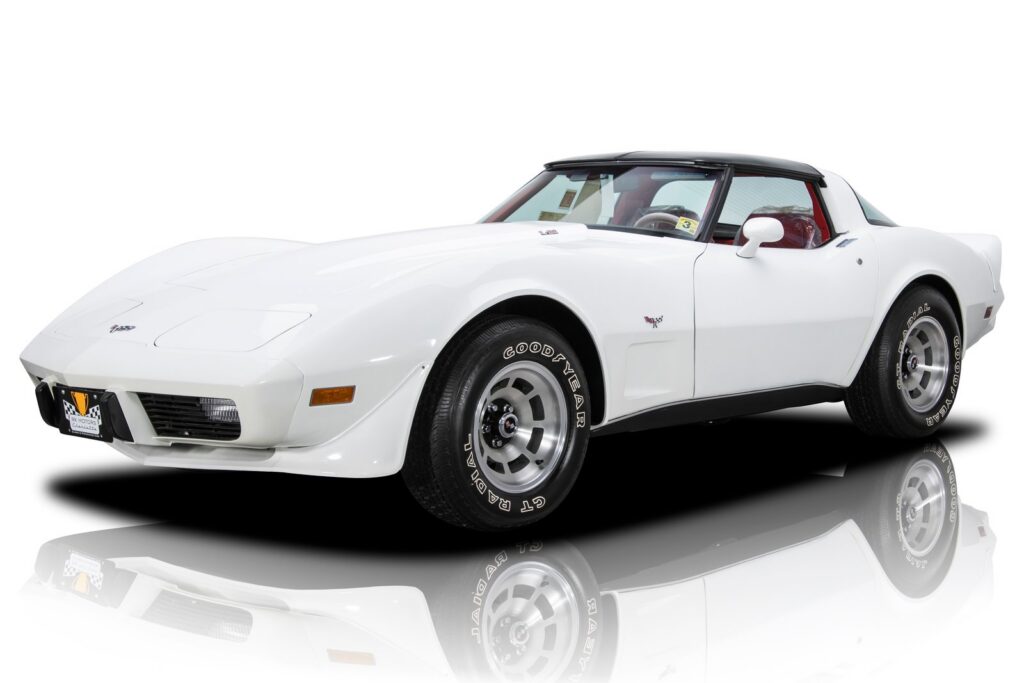
Part of that gap is horsepower. By 1975, emissions equipment and the move to net ratings had cut the base L48 350 to 165 horsepower, and the big-block was gone after 1974. Part of it is supply: 1979 set the all-time C3 production record at 53,807 cars, more than either 1968 or 1970 by a wide margin. The rubber-bumper cars that do command a premium are the ones with something unrepeatable: very low miles, a special edition, or a 454.
The C3 Price Ladder: What Each Tier Is Worth Right Now
Like the C2, the C3 market is best understood as a ladder. Each rung is defined mainly by bumper era, engine option, and documentation. Benchmarks below are CLASSIC.COM average sale prices and Market Benchmark values as of October 2026, plus Van Steel’s April 2026 market analysis. They represent typical good examples; tired drivers trade below them and judged, documented cars above.
| Rung | What it is | Current market benchmark |
|---|---|---|
| 1. Late rubber-bumper drivers | 1975–1982 base L48 small-block coupes | ~$14,000–$18,000 (1979 avg. $14,390; 1982 avg. $17,301) |
| 2. Special editions and L82s | 1973–1980 L82; 1978 Silver Anniversary and Indy Pace Car; 1982 Collector Edition | ~$21,000–$29,000 (L82 ~$20,800; Pace Car ~$29,000) |
| 3. Transition and late big-block cars | 1973 small-blocks; 1973–1974 454s | ~$21,000–$26,000 for standard cars; numbers-matching 454s higher |
| 4. Chrome-bumper small-blocks | 1968–1972 327 and 350 coupes and convertibles | ~$32,000–$41,000 (standard-variant averages) |
| 5. Chrome-bumper LT1 and big-blocks | 1970–1972 LT1; 427/390, 427/400, 427/435, LS5 454 | ~$54,000 (LT1); ~$45,000–$85,000+ for #2-condition big-blocks |
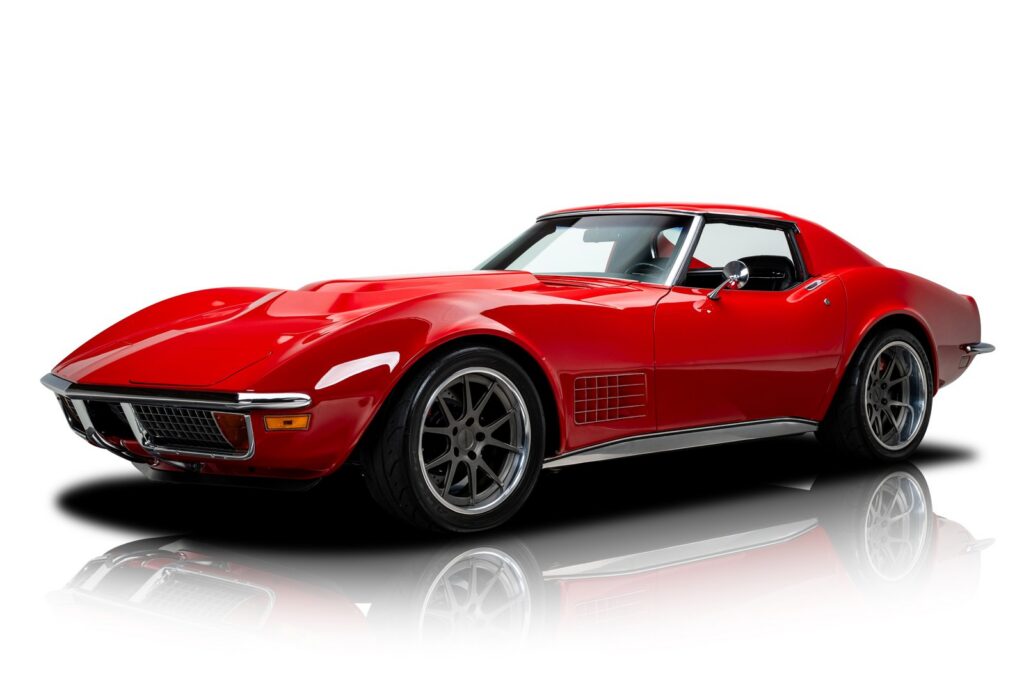
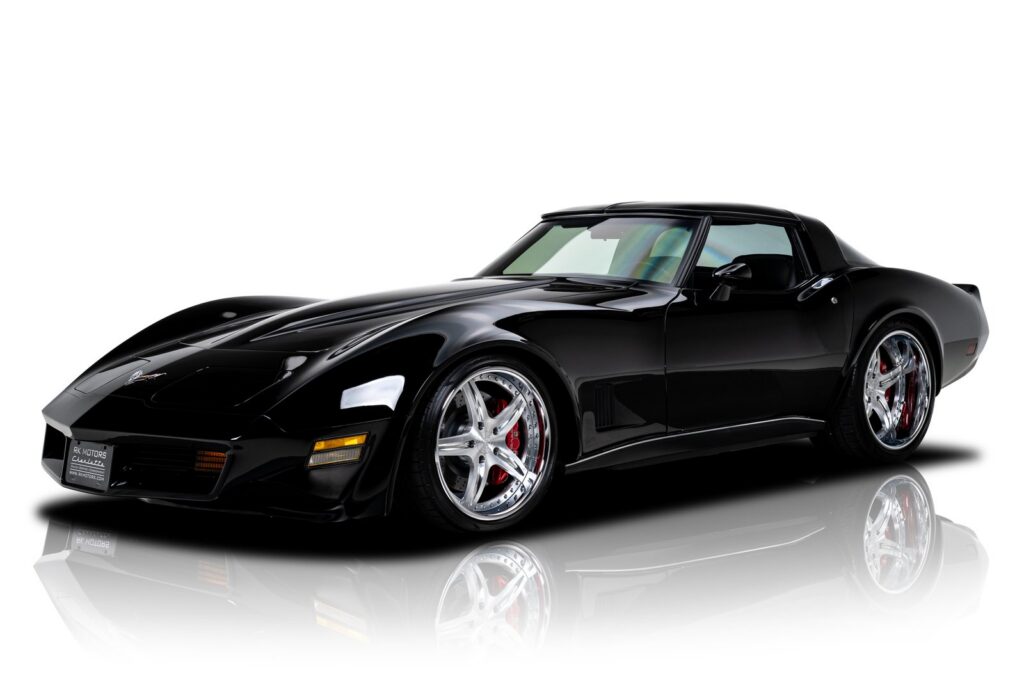
| 6. Pro-built restomods | Modern LS/LT drivetrain, aftermarket chassis | RK Motors’ current C3 restomod: $99,900 |
| 7. Aluminum-head and 454/425 cars | 1968–1969 L89 427/435; 1971 LS6 454/425 | ~$124,000 (L89) to ~$160,000 (LS6) |
| 8. Blue-chip race-derived cars | ZR1 (1970–1972), L88 (1968–1969), ZR2 (1971) | ~$209,000 (ZR1) to ~$420,000 (L88) and ~$543,000 (ZR2) |
Rung 1: Late rubber-bumper drivers
This is the most affordable way into a classic Corvette. The 1975–1982 cars were built in huge numbers, and CLASSIC.COM’s averages for standard examples sit in the mid-teens. Van Steel’s analysis puts clean driver-quality C3s at roughly $15,000–$45,000 depending on year and condition. For buyers who want the Coke-bottle shape, T-tops, and a car they can drive without worry, this rung makes sense. Just don’t buy one expecting it to behave like a chrome-bumper big-block in the market.
Rung 2: Special editions and the L82
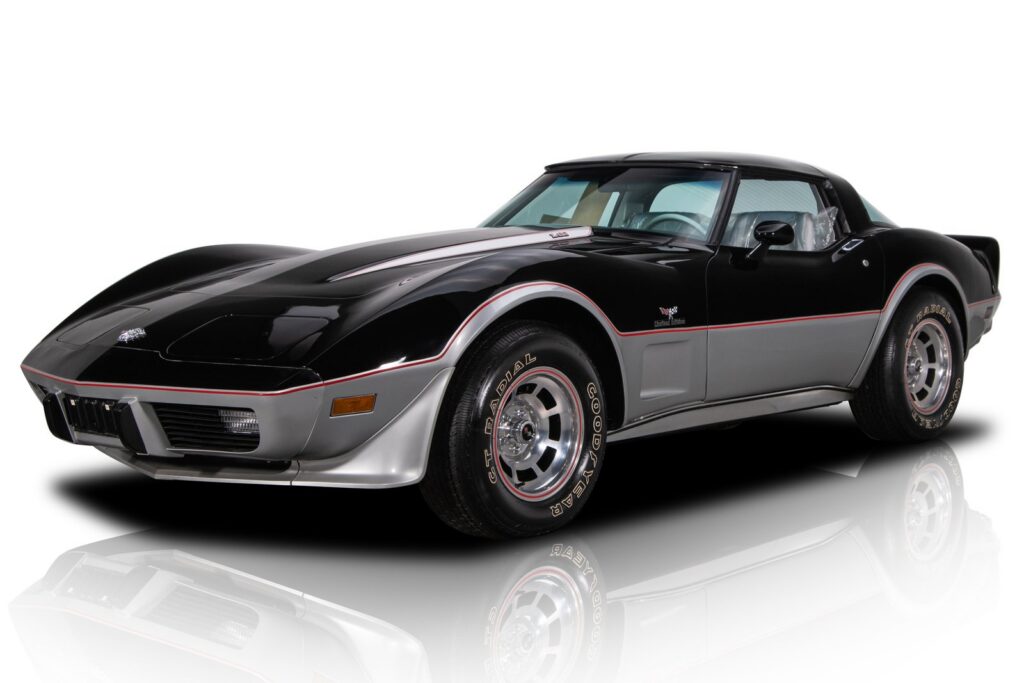
The optional L82 350 was the performance small-block of the rubber-bumper era, and CLASSIC.COM benchmarks it near $20,800. The 1978 Silver Anniversary cars sit at about the same level (~$20,900), the 1982 Collector Edition near $24,500, and the 1978 Indy 500 Pace Car (6,502 built) near $29,000. Mileage is what separates the ordinary from the exceptional here. RK Motors has sold two 1978 Pace Cars, one with 42 documented miles and one with 794, plus a two-owner 1979 L82 with 5 miles. Cars like those trade on originality, and they sit well above the benchmark.
Rung 3: The transition year and the last big-blocks
The 1973 Corvette is a one-year-only mix: urethane nose, chrome rear bumper, and the last year of the chrome tail. CLASSIC.COM’s 1973 average of $25,883 sits right between the two eras. The 454 big-block lasted through 1974, and numbers-matching 1973–1974 454 cars are a quiet favorite with our buyers. Both of the 1973s RK Motors has sold were restored, numbers-matching 454 four-speed cars, including this 1973 454 coupe.
Rung 4: Chrome-bumper small-blocks
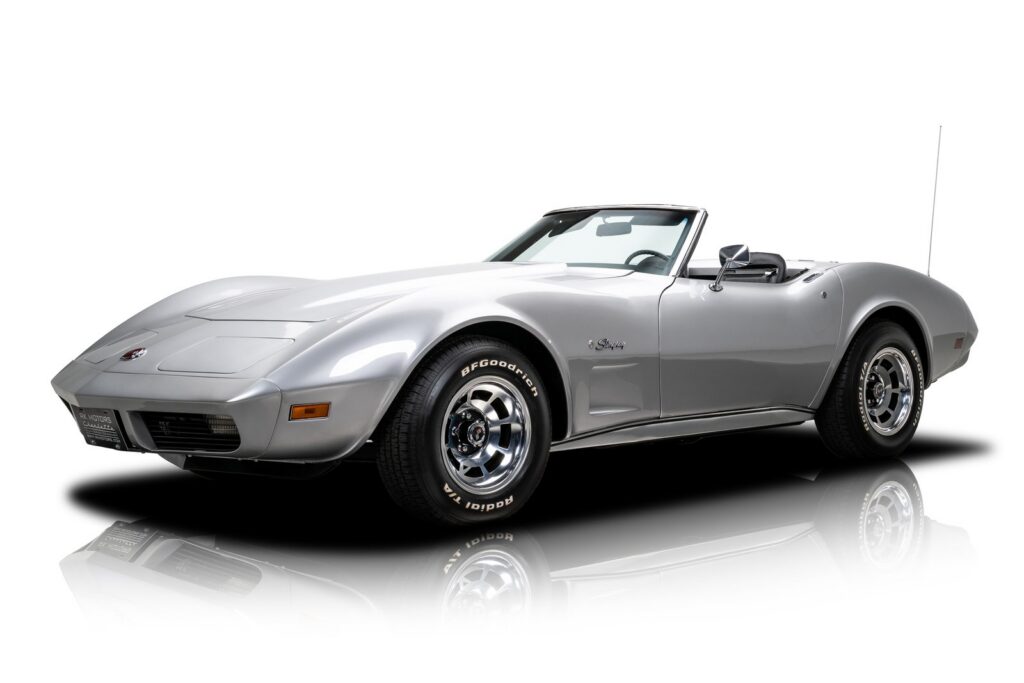
The 1968 base engine was the 327/300; from 1969 it was the 350. Standard-variant chrome-bumper cars average between about $32,000 and $41,000 on CLASSIC.COM, with 1968 and 1969 at the top. Options matter: four-speeds, factory air, side exhaust, and the 1969–1972 removable T-tops all add value. Our current 1974 convertible is a rubber-bumper car, but it shows what a body-off restoration with a numbers-matching L48 brings today at $46,900.
Rung 5: LT1 and the chrome-bumper big-blocks
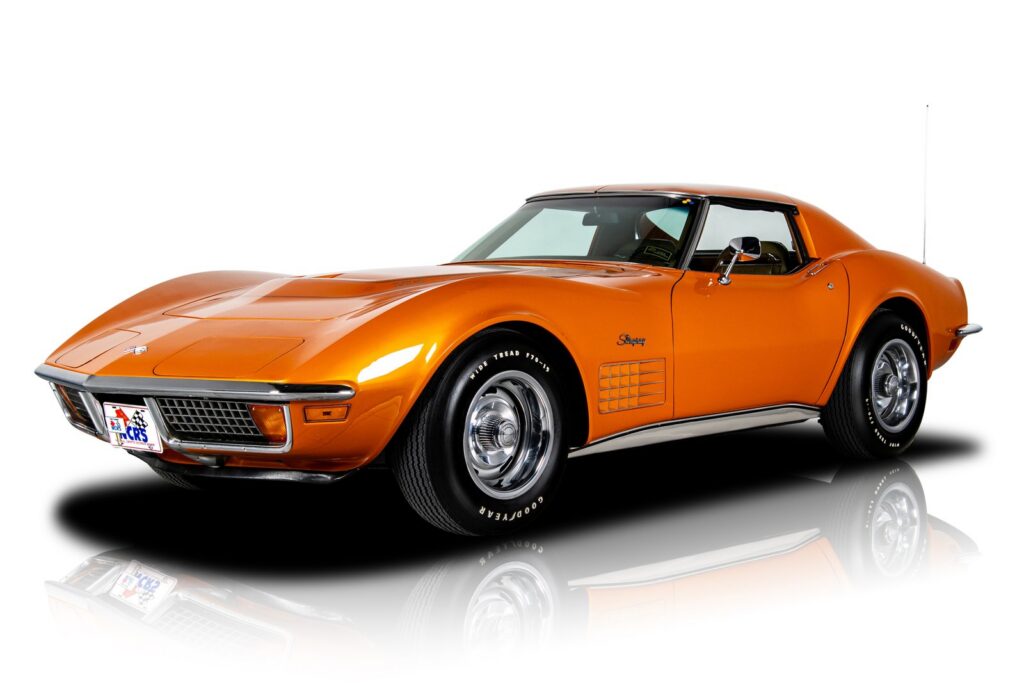
The solid-lifter LT1 350 (1970–1972) is the C3’s high-performance small-block, and CLASSIC.COM benchmarks it around $54,000. Documented LT1s go higher. We’ve sold four, including an NCRS Top Flight and Bloomington Gold 1972 LT1 and an NCRS Top Flight 1972 LT1 roadster with factory air.
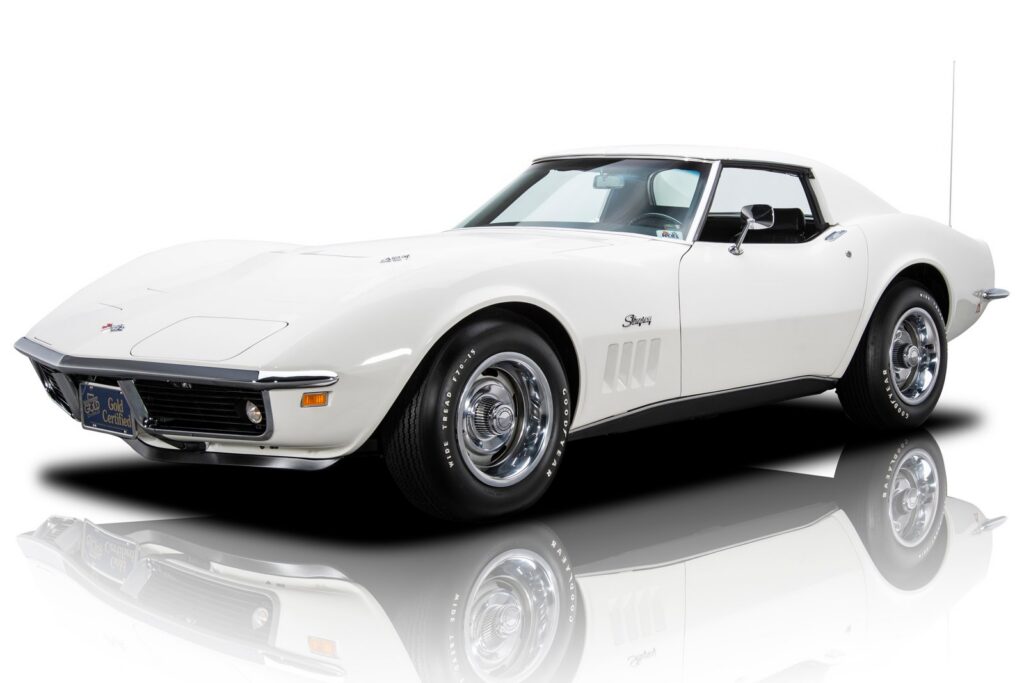
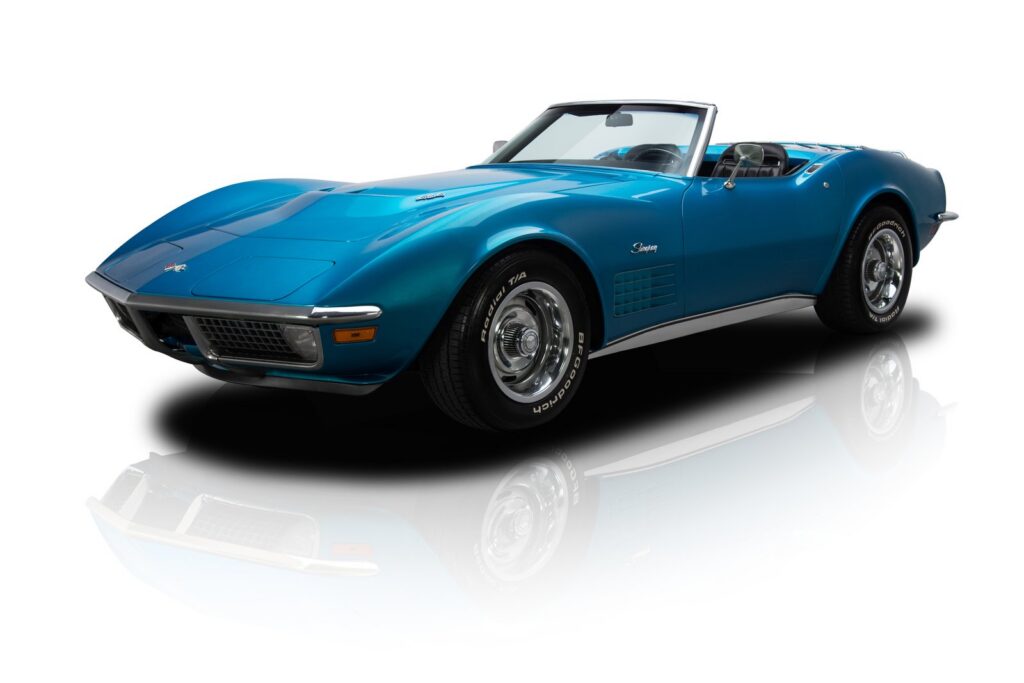
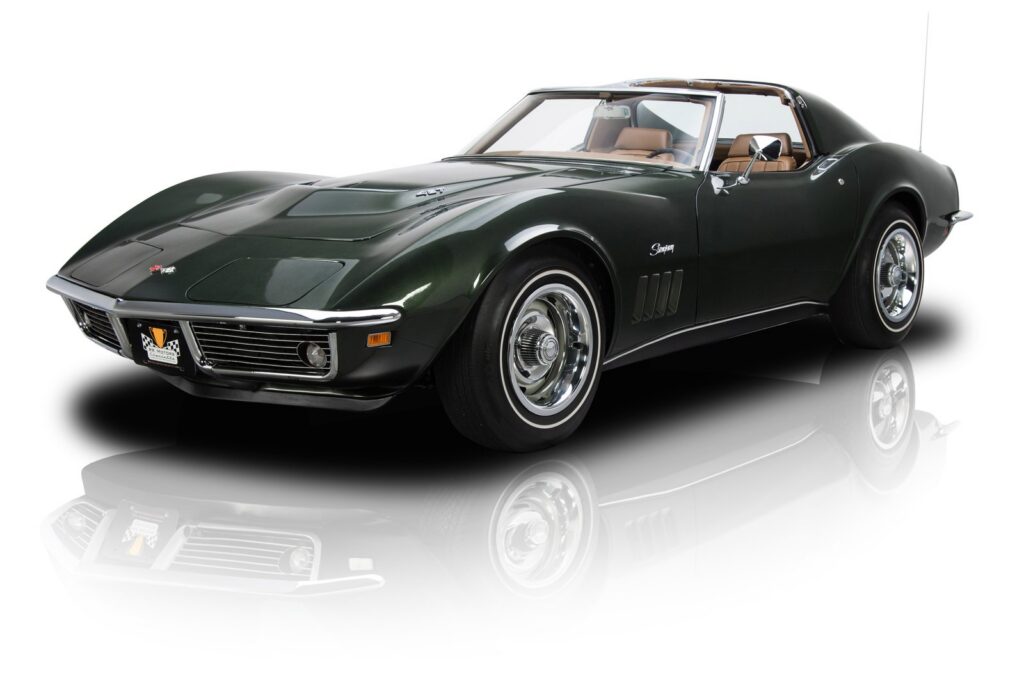
The big-blocks are the heart of RK Motors’ C3 business. The 427/390, Tri-Power 427/400 L68, and 427/435 L71 were offered in 1968 and 1969, followed by the LS5 454 in 1970–1972. Van Steel puts solid #2-condition chrome-bumper big-blocks at roughly $45,000–$85,000, and documented, judged L71s trade above that. Our sold archive includes a Triple Diamond Award-winning 1969 427/390 coupe, a numbers-matching 1970 LS5 454 roadster, and a Benchmark, NCRS 4-Star, and Duntov-awarded 1969 427/390 survivor.
Rung 6: Professionally built restomods
Restomod pricing depends far more on the builder, chassis, and finish than on the donor car’s engine code, as we covered in The Builder Signature Premium. The C3 has become one of the most popular restomod platforms because the donor cars are affordable and the chassis responds well to modern suspension and brakes. Van Steel notes that C3 owners are far more likely than C2 owners to invest in suspension and brake upgrades.
RK Motors’ recent C3 restomods show the range of what’s being built:
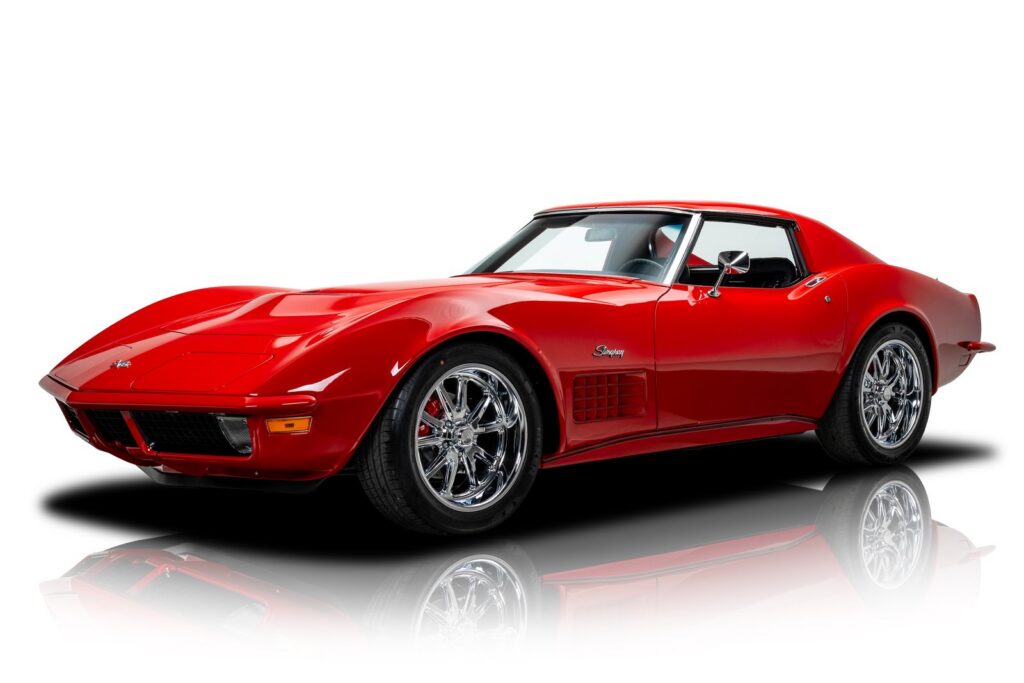
- 1971 Corvette restomod, frame-off restored, 5.7L LS1, automatic, A/C: $99,900 (currently for sale)
- 1972 Corvette pro touring, 764hp 427ci Kaase LSX, Van Steel suspension (sold)
- 1980 Corvette restomod, 600hp 427ci LS3, 6-speed, Roadster Shop chassis (sold)
That last car is a useful point: a rubber-bumper C3 is a perfectly respected restomod starting point. On a pro-built car, bumper era matters far less than build quality.
Rung 7: L89 and LS6
The L89 was the L71 427/435 with aluminum cylinder heads, built in small numbers in 1968 and 1969. CLASSIC.COM benchmarks it near $124,000. RK Motors has sold three, including a 2014 Bloomington Gold and NCRS Top Flight 1969 L89. The 1971 LS6 454, rated at 425 horsepower and built in just 188 Corvettes, benchmarks near $160,000.
Rung 8: ZR1, L88, and ZR2
At the top are the race-derived cars. The 1970–1972 ZR1 package (53 built) benchmarks near $209,000. The L88 427, with only 196 built across 1968 and 1969, benchmarks around $420,000, and 2026 sales have ranged from $330,000 to $860,000. The 1971 ZR2, a big-block race package built just 12 times, benchmarks near $543,000. These cars are auction-house territory, and authenticity documentation is everything.
Which C3 Years Hold Value Best
- 1968–1969: the strongest years in both CLASSIC.COM’s averages (about $40,000+) and RK Motors’ sales (44% of our C3 volume). The 427 big-blocks, the L88 and L89, and the original styling all live here.
- 1970–1972: still chrome-bumper cars, with the LT1, LS5, LS6, and ZR1 available. Standard averages are a step below 1968–1969 at roughly $32,000–$34,000, but documented LT1 and big-block cars hold value well.
- 1973–1974: transition cars. Numbers-matching 454s are the most desirable of this group.
- 1975–1982: the most affordable C3s. Value holds best in low-mile survivors, special editions (1978 Pace Car, 1978 Silver Anniversary, 1982 Collector Edition), and as restomod platforms.
What Moves a C3 Up or Down the Ladder
- Bumper era: roughly a 2x difference in standard-variant averages between 1968–1972 and 1974–1982.
- Engine code and provenance: the gap between a base small-block and an L89 is roughly $85,000 at benchmark, and it only holds if the engine is real.
- Documentation: window sticker, build sheet, tank sticker, Protect-O-Plate, and ownership history.
- Judging results: NCRS Top Flight, Bloomington Gold, and combined awards like Triple Diamond and Duntov mark the top of the factory-correct market.
- Mileage and originality: the single biggest value driver for rubber-bumper cars.
- Options: four-speeds (especially the M21 and M22), factory air, side exhaust, and convertible body style all matter on correct cars.
- Build quality (restomods): chassis brand, builder reputation, and fit and finish matter more than the original drivetrain.
Frequently Asked Questions
What is a C3 Corvette worth right now?
Most C3 Corvettes (1968–1982) are worth between about $14,000 and $85,000 in 2026, depending on year, engine, and condition. CLASSIC.COM’s average sale prices run from about $14,000–$18,000 for late rubber-bumper cars to about $32,000–$41,000 for 1968–1972 chrome-bumper cars. Strong big-blocks reach $45,000–$85,000 or more, L89 and LS6 cars benchmark around $124,000–$160,000, and the L88 benchmarks around $420,000.
Is a C3 Corvette a good investment?
We’re not able to offer investment advice. What we can share is observable demand: chrome-bumper C3s make up 73% of RK Motors’ C3 sales despite being only about 25% of production, and CLASSIC.COM has recorded more than 4,000 standard-variant C3 sales totaling over $105 million. Hagerty forum discussion cited by Van Steel describes chrome-bumper values as largely flat, so anyone buying with investment in mind should treat a C3 as a discretionary purchase first and consult an independent financial advisor.
Which C3 Corvette years are most desirable?
1968 and 1969 are the most desirable C3 years. They carry the highest CLASSIC.COM standard-variant averages (about $40,000), offered the 427 big-blocks including the L71, L89, and L88, and account for 44% of RK Motors’ C3 sales. 1970–1972 chrome-bumper cars, especially LT1, LS5, and LS6 examples, are next.
Why are chrome-bumper C3s worth more than rubber-bumper C3s?
Chrome-bumper cars (1968–1972) have the original, cleaner styling, the high-compression engines, and the big-block options, and they were built in far smaller numbers: about 133,000 cars versus more than 400,000 from 1973 to 1982. Their standard-variant average sale prices are roughly double those of 1974–1982 cars.
Is the 1973 Corvette a chrome-bumper car?
Partly. The 1973 Corvette has a body-colored urethane front bumper and a chrome rear bumper, making it a one-year transition car. Collectors generally define the chrome-bumper era as 1968–1972, and 1973 values sit between the two eras.
What is the rarest and most valuable C3 Corvette?
Among regular C3s, the 1971 ZR2 (12 built) and the 1968–1969 L88 (196 built) are the most valuable, benchmarking around $543,000 and $420,000 on CLASSIC.COM. Two 1969 ZL1 aluminum-block cars were also built, and they are in a category of their own.
Are rubber-bumper C3 Corvettes worth buying?
Yes, for the right buyer. They’re the most affordable classic Corvettes, often in the mid-teens, and they make excellent drivers and restomod platforms. For value, focus on low-mile originals, special editions like the 1978 Pace Car, or a 1974 454. Seven of the 17 rubber-bumper cars RK Motors has sold showed fewer than 20,000 miles.
Is a C3 restomod worth more than an original?
It depends on the original. A professionally built C3 restomod typically sells for more than a standard small-block original. RK Motors’ current LS1-powered 1971 is $99,900, well above standard chrome-bumper averages. A documented big-block, L89, LS6, or L88 original is a different market, and those cars should generally stay original.
How many C3 Corvettes has RK Motors sold?
RK Motors’ public sold inventory currently lists 64 Corvettes from the 1968–1982 model years, including 17 1969s, 13 1972s, and 11 1968s. Restomods made up 8 of our 15 most recent C3 sales.
Does RK Motors ship C3 Corvettes?
Yes. Every RK Motors listing can be shipped anywhere in the world, and each vehicle receives a comprehensive, multi-point inspection before it’s listed for sale.
Where can I see RK Motors’ current and sold C3 Corvettes?
Browse all current Corvette inventory, or review past sales in our sold archive. For the earlier generation, read RK Knows: C2 Corvette, and for the bigger picture across generations, read The Corvette Ladder. If you own a C3 and are thinking about selling, learn about consigning with RK Motors.
Market benchmarks: CLASSIC.COM C3 Corvette average sale prices by model year and Market Benchmark values by variant (October 2026); CLASSIC.COM L88 sales data (2026); Van Steel, “The 1963–1982 Corvette Market” (April 2026). Production figures: Chevrolet. RK Motors data: public sold-inventory listings, October 2026.