
There’s more than one way to own a classic American icon. For some, the goal is preservation—finding a car that reflects exactly how it left the factory, down to the smallest detail. For others, it’s about evolution—taking that same icon and refining it into something sharper, faster, and easier to live with today. Side by side, these two approaches don’t compete. They define two distinct philosophies within the same passion.
At RK Motors, that contrast comes into focus with two very different machines: a 1965 Ford Mustang Fastback reimagined as a modern Eleanor-inspired restomod, and a 1970 Plymouth GTX preserved with numbers-matching authority and extensive factory documentation.
The Mustang represents what happens when legacy meets intent. The fastback shape has always carried a certain attitude—compact, aggressive, and unmistakably American—but this example pushes that identity further. Finished in Pepper Gray with black stripes and fitted with an Eleanor-style body kit, it leans into the cinematic persona that helped redefine the Mustang for a new generation. The look is instantly recognizable, but it’s what sits beneath the surface that defines the experience.
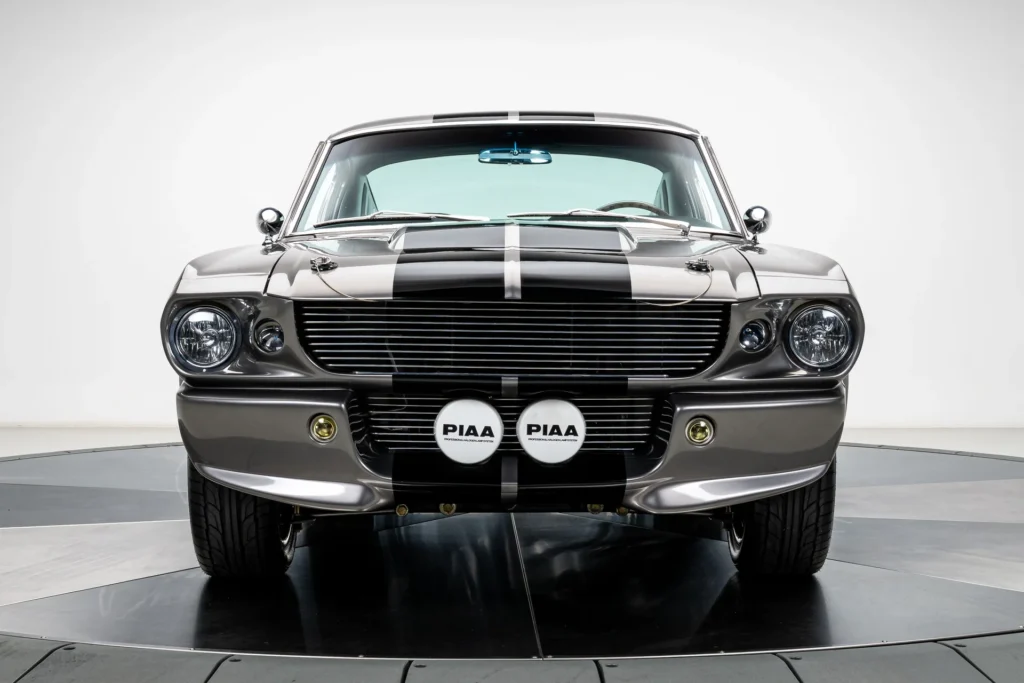
A 347ci stroker V8 replaces the limitations of period-correct performance with something far more immediate. Paired with a Tremec 5-speed manual transmission and a Ford 9-inch rear with 3.55 gears, the car delivers power in a way that feels modern, not nostalgic. Suspension upgrades—including a Mustang II front setup, 4-link rear, and QA1 coilovers—transform how the car responds, while power rack-and-pinion steering and Wilwood four-wheel disc brakes give it the kind of control expected from contemporary performance machines.
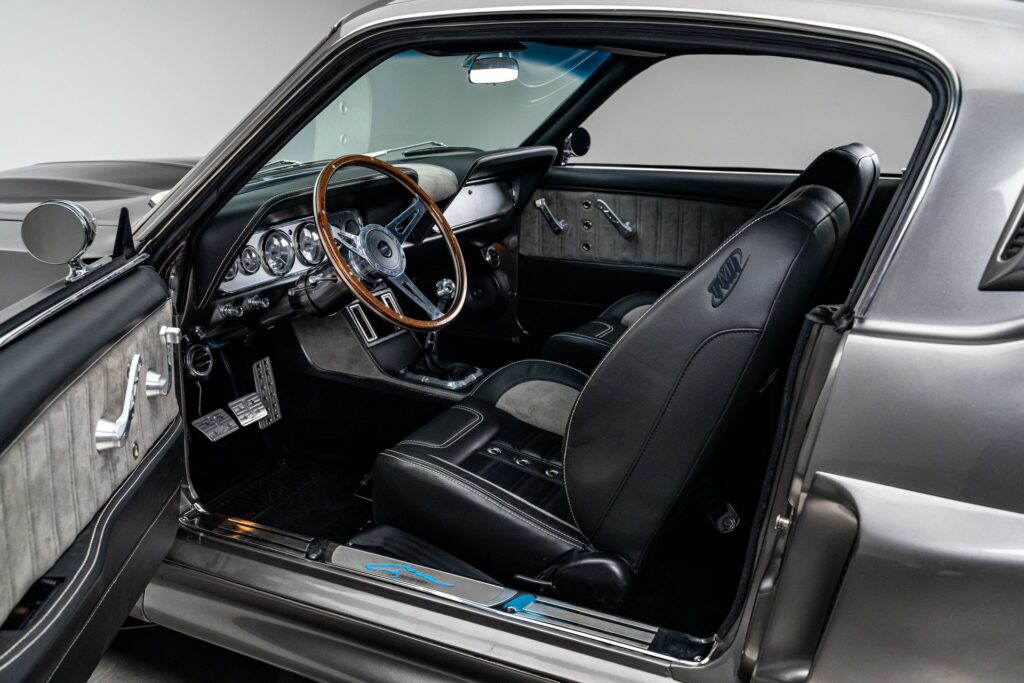
Inside, the theme continues. Custom TMI bucket seats trimmed in vinyl and Alcantara, a wood-rimmed steering wheel, Classic Instruments gauges, and modern air conditioning create an environment that blends classic design with current usability. It’s a car built to be driven without hesitation—something that captures the spirit of the original while removing its compromises.
The GTX takes the opposite approach, and does so with equal conviction.
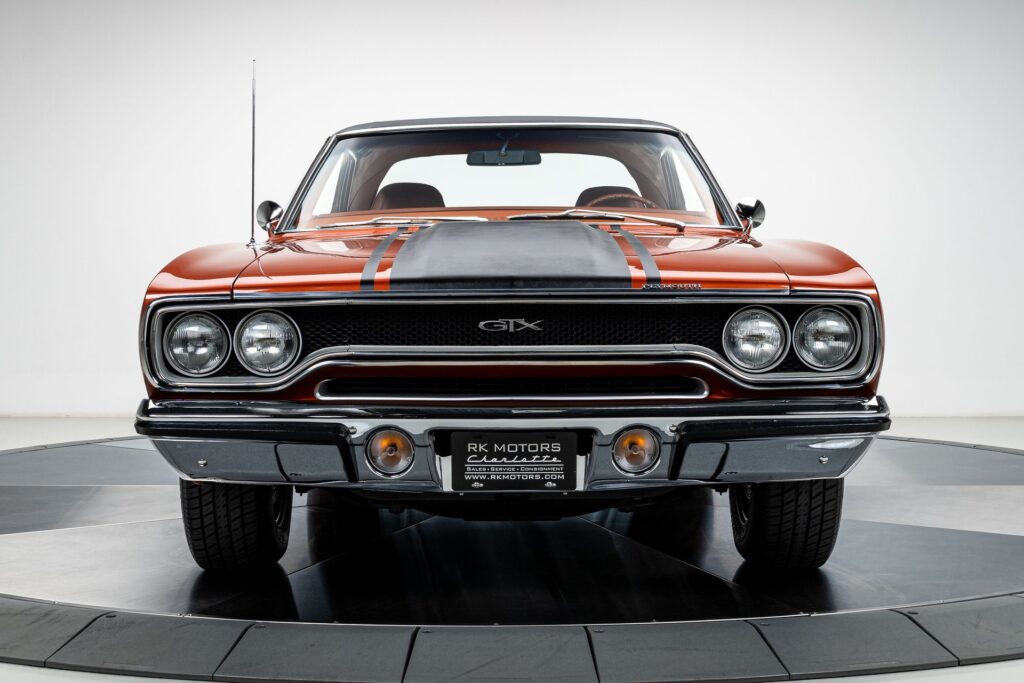
Where the Mustang evolves, the 1970 Plymouth GTX preserves. Finished in Burnt Orange with a black vinyl top, it reflects one of Mopar’s most defining visual combinations—bold, unmistakable, and deeply tied to the era. Often described as the “gentleman’s muscle car,” the GTX offered big-block performance with an added layer of refinement, and this example stays true to that identity.
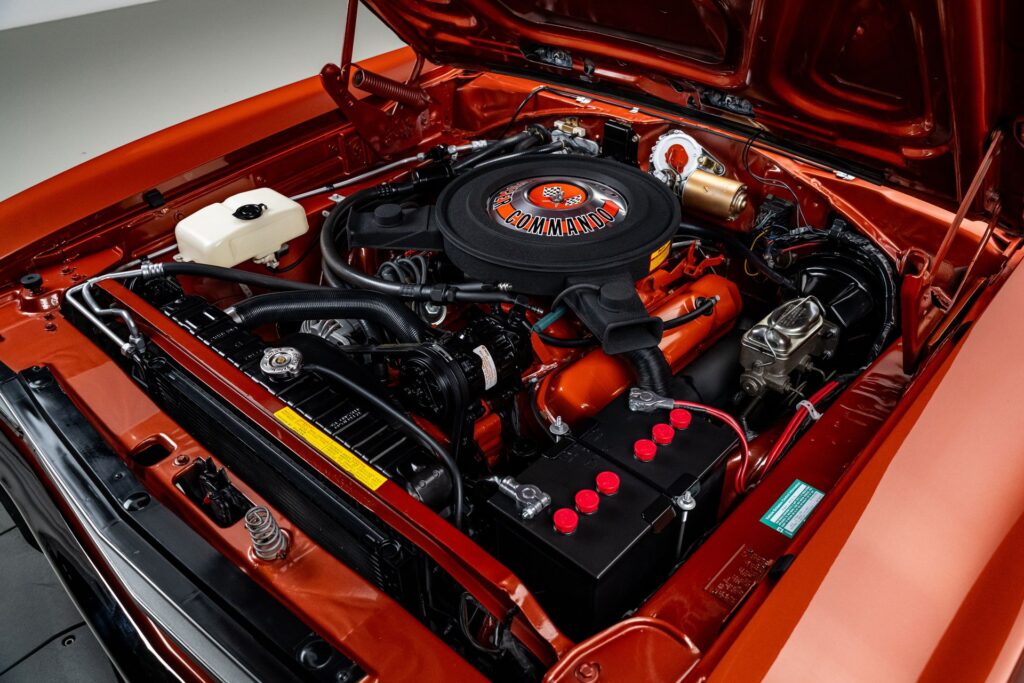
Under the hood sits its numbers-matching 440ci Super Commando V8, rated at 375 horsepower and presented in a largely factory-correct configuration. That engine is backed by its original A727 TorqueFlite automatic transmission and an 8¾-inch rear axle with 3.23 gears. The driving experience is exactly what the car was engineered to deliver in 1970—effortless torque, smooth delivery, and a sense of mechanical honesty that doesn’t rely on reinterpretation.
What elevates this GTX further is its documentation. Included with the car are its original window sticker, broadcast sheet, bill of sale, invoice, pre-delivery inspection sheet, warranty card, and more—forming a complete paper trail that reinforces its authenticity. Details like the matching VIN stamp on the radiator support and its correct factory options, including the Performance Hood Treatment and optional buddy seat, place it firmly in the category of collector-grade examples.
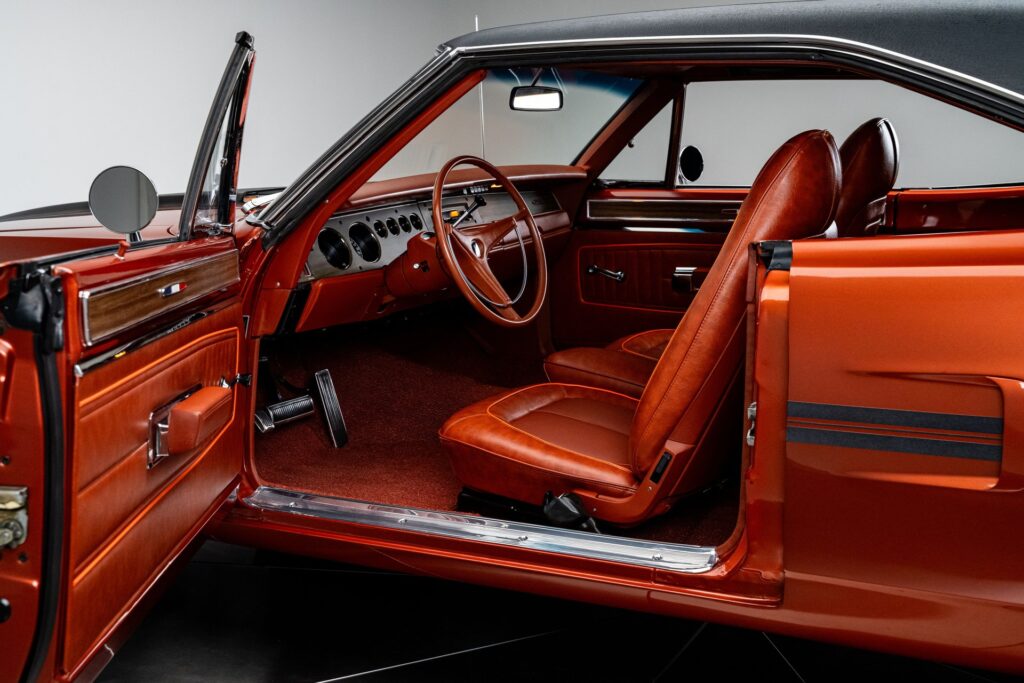
Inside, the Burnt Orange interior continues the theme, with premium vinyl bucket seats, a rally dash, factory air conditioning, and period-correct features that reflect Plymouth’s effort to balance performance with comfort. Even with subtle updates like electronic ignition and a modern Sanden compressor, the car remains visually and mechanically aligned with its original intent.
Together, these two cars illustrate a simple truth: there is no single “right” way to own a legend.
The Mustang is about interpretation. It takes a familiar shape and enhances it for modern roads, modern expectations, and drivers who want performance without compromise. It’s immediate, responsive, and built for engagement.
The GTX is about preservation. It offers a direct connection to a specific moment in automotive history, supported by documentation and correctness that give it long-term significance. It doesn’t reinterpret the past—it carries it forward intact.
For today’s collector, the decision isn’t about which approach is better. It’s about what kind of experience matters more.
Do you want to drive the legend as it was—or as it could have been?