
There was a time when pro touring builds existed on the fringe of the collector car world. They were admired for their craftsmanship and performance, but often viewed as departures from originality rather than legitimate alternatives to it. That perspective has shifted. Today, pro touring is no longer a niche—it is a defined category, supported by engineering, craftsmanship, and a growing base of buyers who understand exactly what these cars represent.
At RK Motors, that evolution is evident across the inventory. A twin-turbo 1957 Chevrolet Bel Air, a professionally built 1969 Camaro, and a highly developed 1972 Corvette each approach the pro-touring formula differently. Together, they illustrate how far the category has come, and why it now stands alongside factory-correct restorations as a distinct and respected path within the collector market.
Engineering as the Foundation
What separates a pro-touring car from a traditional restoration is not simply the presence of modern components. It is the integration of those components into a cohesive system. The goal is not to update a car incrementally, but to reengineer it entirely, allowing the platform to perform at a level that aligns with contemporary expectations.
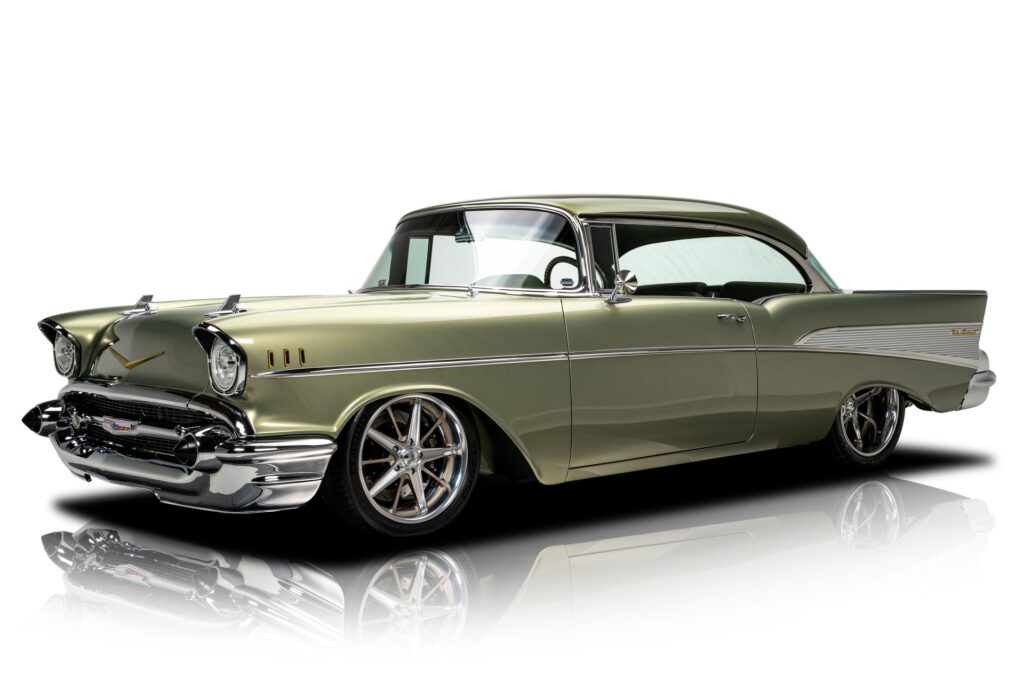
The 1957 Chevrolet Bel Air exemplifies that approach at its highest level. Built by Graham’s Hot Rod Shop, the car is centered around a fully developed pro-touring chassis and powered by a 427ci LS3 twin-turbo V8 producing up to 1,600 horsepower on race fuel. Every supporting system—from the Gearstar 4L80E transmission to the Strange 9-inch rear axle and QA1 coilover suspension—has been selected and engineered to manage that output with precision.
This level of integration transforms the driving experience. Acceleration is immediate and substantial, but equally important is the car’s ability to maintain control. Large-diameter Wilwood brakes, modern steering systems, and performance-focused suspension geometry allow the Bel Air to deliver not just speed, but confidence. It is a car designed to operate at a level far beyond its original capabilities, without compromising stability or usability.
Precision Over Interpretation
If the Bel Air represents the upper limit of pro-touring performance, the 1969 Camaro demonstrates the discipline required to execute the concept correctly. Built as a comprehensive ground-up project, this car reflects a focus on mechanical precision and balance rather than excess.
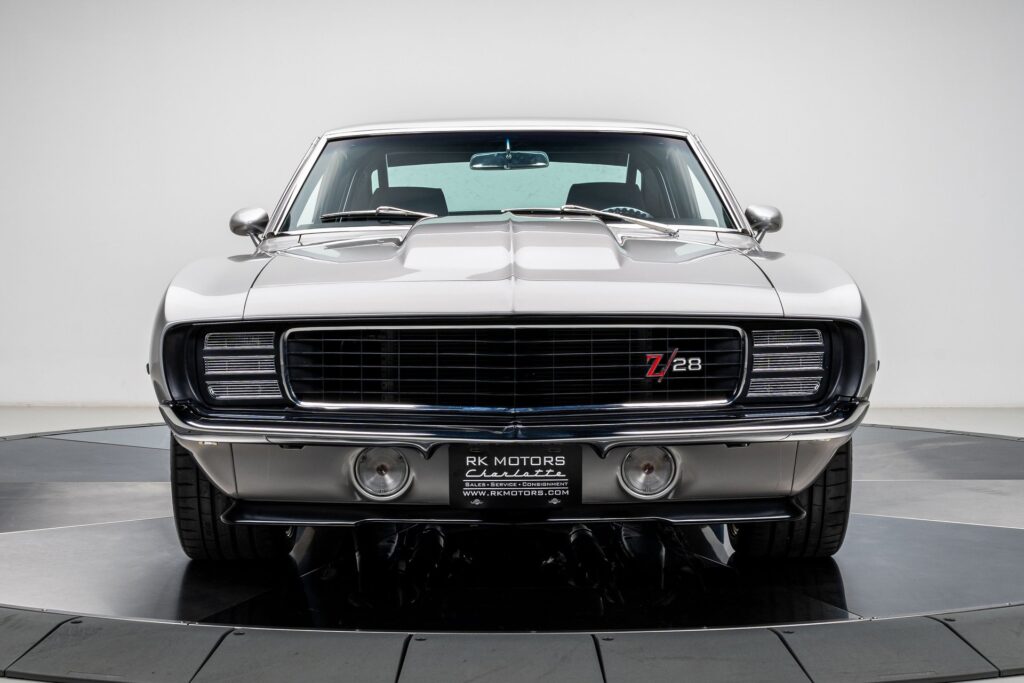
At its core is a 7.0-liter LS7 engine paired with a Tremec Magnum six-speed manual transmission and supported by a Detroit Speed–engineered chassis. The combination of a hydroformed front subframe, QuadraLink rear suspension, and modern braking system creates a platform that is responsive, predictable, and capable across a range of driving conditions.
What defines this Camaro is not a single component, but the way those components function together. The powertrain, chassis, and braking systems are aligned in a way that allows the car to perform consistently under real-world conditions. Documentation of the build, including receipts and component manuals, reinforces the level of detail involved in its construction.
Inside, the car maintains a balance between performance and usability. Recaro seating, modern climate control, and integrated electronics provide comfort without detracting from the driving experience. The result is a car that feels contemporary in its execution while remaining recognizable in its design.
Performance With Provenance
The 1972 Corvette occupies a unique position within the pro-touring category, combining modern performance with documented history. Originally a well-preserved example with recognized certifications, it has been transformed into a high-performance machine while retaining its connection to its origins.
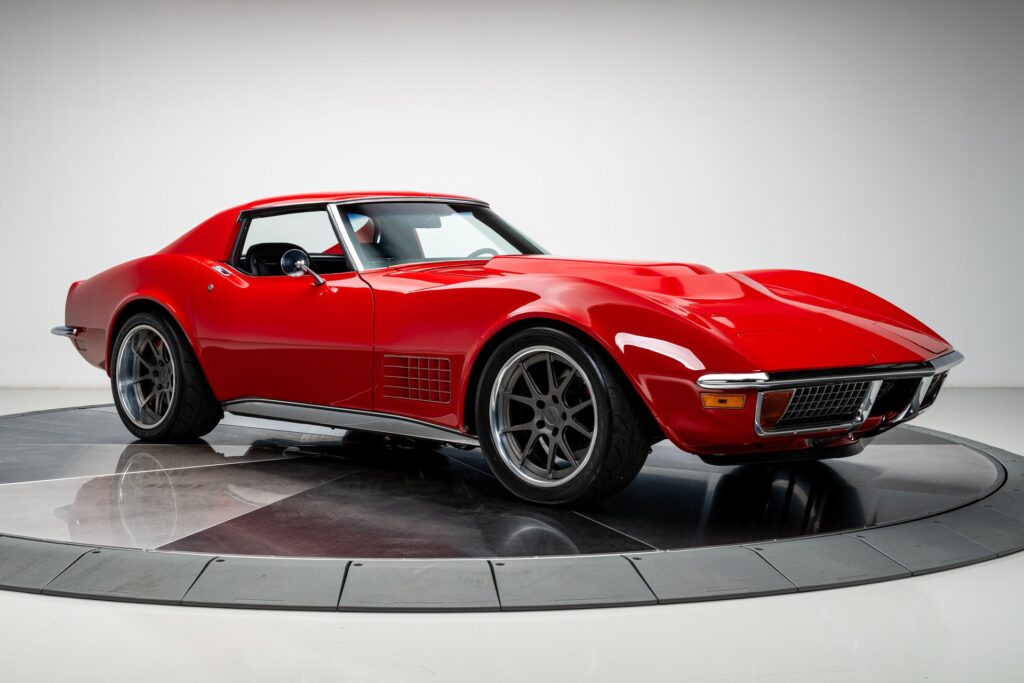
Powered by a 427ci LSX V8 built by Jon Kaase Racing Engines, the car produces 764 horsepower and is supported by a Hughes-built TH400 transmission and a Van Steel autocross-spec suspension system. The addition of JRI coilovers, Wilwood braking components, and modern steering systems allows the Corvette to operate with a level of precision that aligns with competitive performance standards.
What distinguishes this car is the balance between its past and its present. While the drivetrain and chassis have been extensively upgraded, the car’s history remains intact. Its documented background and prior certifications provide a foundation that enhances its appeal, demonstrating that performance and provenance are not mutually exclusive.
A Defined Category
The evolution of pro touring reflects broader changes within the collector car market. As buyers have become more informed and expectations have increased, the demand for cars that deliver both performance and usability has grown. Pro-touring builds meet that demand by offering a driving experience that aligns with modern standards while retaining the visual identity of classic platforms.
This shift has elevated pro touring from a stylistic trend to a recognized category. Buyers no longer view these cars as alternatives to original restorations, but as distinct offerings with their own criteria for evaluation. Build quality, component selection, engineering integration, and documentation now define value within the segment.
At the same time, the best examples demonstrate a level of discipline that separates them from less cohesive builds. The cars presented by RK Motors reflect that standard. Each has been developed with a clear objective, supported by professional construction and executed with attention to detail.
The Modern Collector’s Perspective
For today’s collector, the decision to pursue a pro-touring car is not driven by compromise. It is a deliberate choice based on how the car will be used and what the owner values most. Some prioritize originality and historical accuracy. Others prioritize performance, drivability, and the ability to engage with the car in a more dynamic way.
Pro touring provides a solution for the latter group, offering cars that can be driven with confidence in a variety of environments. They are equally at home on the highway, in urban settings, or on performance-oriented routes. This versatility has expanded their appeal, particularly among buyers who intend to use their cars regularly.
The Conclusion
The Bel Air, Camaro, and Corvette each represent a different interpretation of the pro-touring concept, but all share a common foundation. They are engineered systems, not collections of upgrades. They are designed to perform, not simply to impress. And they reflect a level of craftsmanship that aligns with the expectations of today’s collector.
Pro touring is no longer an emerging idea. It is a fully realized category, defined by its own standards and supported by a growing segment of the market. For buyers who value performance, usability, and precision, it offers a compelling alternative to traditional restoration.
At RK Motors, that category is not only recognized—it is represented at the highest level.