
For decades, the collector car world was defined by preservation. The most desirable cars were often the least used, carefully stored and meticulously maintained to reflect a moment in time rather than a lifestyle. Mileage was minimized, exposure was limited, and ownership frequently revolved around stewardship rather than experience.
That mindset is evolving.
A new class of buyer has emerged—one that values the driving experience as much as the car itself. These collectors are not simply acquiring vehicles to display or preserve. They are building collections around usability, performance, and the ability to engage with the car on a regular basis. The result is a growing demand for high-end builds that combine classic design with modern engineering, creating vehicles that are as comfortable on the road as they are compelling on the showroom floor.
At RK Motors, that shift is reflected clearly across the inventory. A Revology-built 1966 Ford Mustang convertible, a fully reengineered 1968 Ford Bronco, and a custom 1972 Chevrolet Blazer each represent a different interpretation of the same philosophy. They are not defined by what they once were, but by what they allow their owners to do now.
Modern Performance, Classic Form
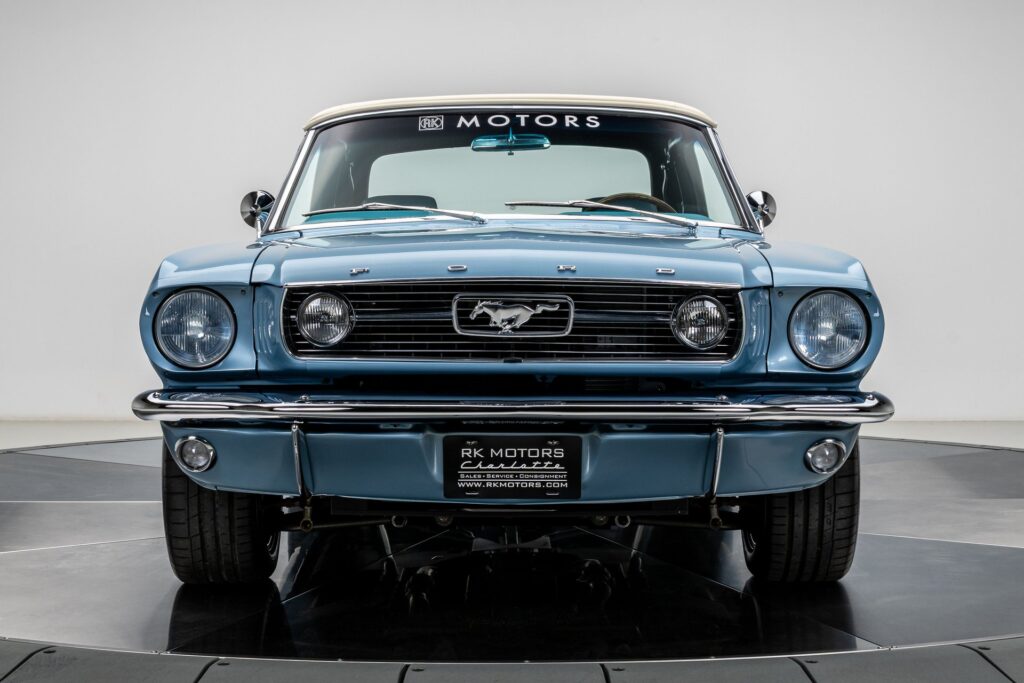
The Revology 1966 Mustang GT Convertible illustrates how far the concept of a “new classic” has progressed. Rather than restoring an existing car, Revology constructs these vehicles using entirely new steel bodies, preserving the original design while incorporating modern engineering throughout.
Power comes from a 5.0-liter Gen 3 Coyote V8 producing 460 horsepower, paired with a Ford 10-speed automatic transmission. The drivetrain is supported by a modern suspension system, power rack-and-pinion steering, and Wilwood four-wheel disc brakes, creating a driving experience that aligns with contemporary performance standards. The result is a car that retains the visual identity of a 1966 Mustang while delivering the refinement, reliability, and usability expected from a modern vehicle.
Inside, the approach is equally deliberate. A two-tone leather interior, updated instrumentation, and integrated technology provide comfort without disrupting the car’s period-correct aesthetic. Features such as air conditioning, remote keyless entry, and push-button ignition are not add-ons, but essential components of a car designed to be driven regularly.
For the modern collector, this type of build removes the traditional barriers to use. It is not a compromise between past and present, but a seamless integration of both.
Capability Without Compromise
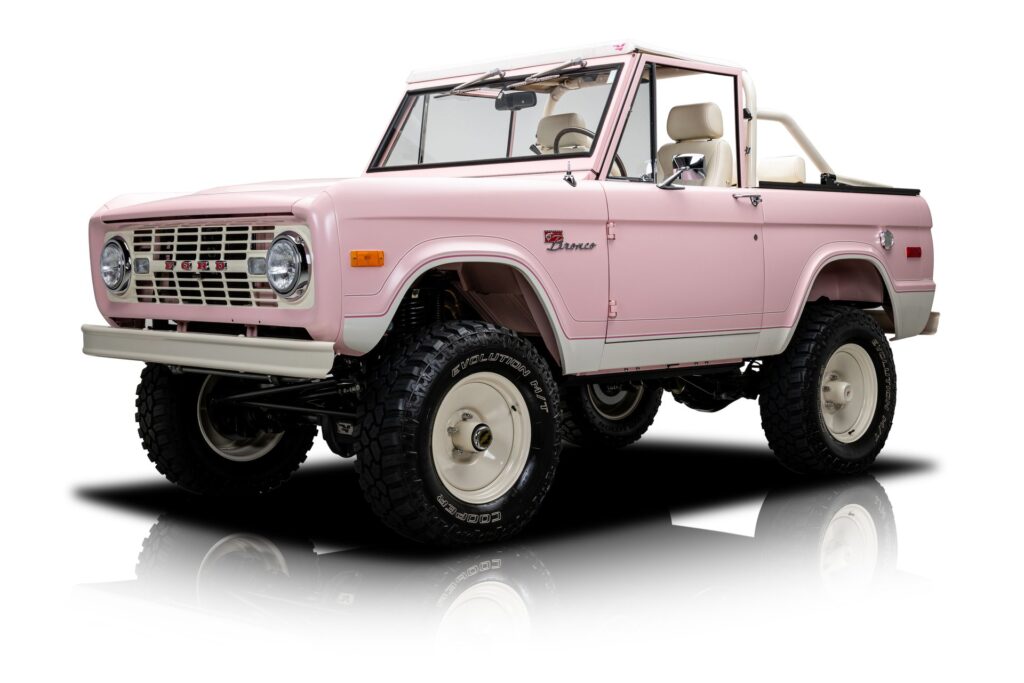
If the Mustang represents the evolution of the classic coupe, the 1968 Ford Bronco demonstrates how utility platforms have been redefined for the same audience. Built by Velocity Restorations, this example is not a refurbishment, but a comprehensive reconstruction that blends vintage design with contemporary capability.
At its core is a Gen III 5.0-liter Coyote V8 paired with a 10-speed automatic transmission, delivering performance that far exceeds the original platform’s intent. The drivetrain is supported by a Roadster Shop chassis, Dana 44 front axle, Ford 9-inch rear axle, and an Atlas transfer case, ensuring durability across a range of driving conditions.
The upgrades extend beyond performance. Modern air conditioning, custom leather upholstery, and integrated audio systems transform the interior into a space that is both functional and refined. Suspension improvements, power steering, and advanced braking systems provide the control necessary to make the vehicle as usable on pavement as it is capable off-road.
This level of execution reflects a shift in how these vehicles are perceived. The Bronco is no longer viewed solely as a vintage utility vehicle, but as a platform capable of delivering a premium driving experience in multiple environments.
Reimagining the Everyday Classic
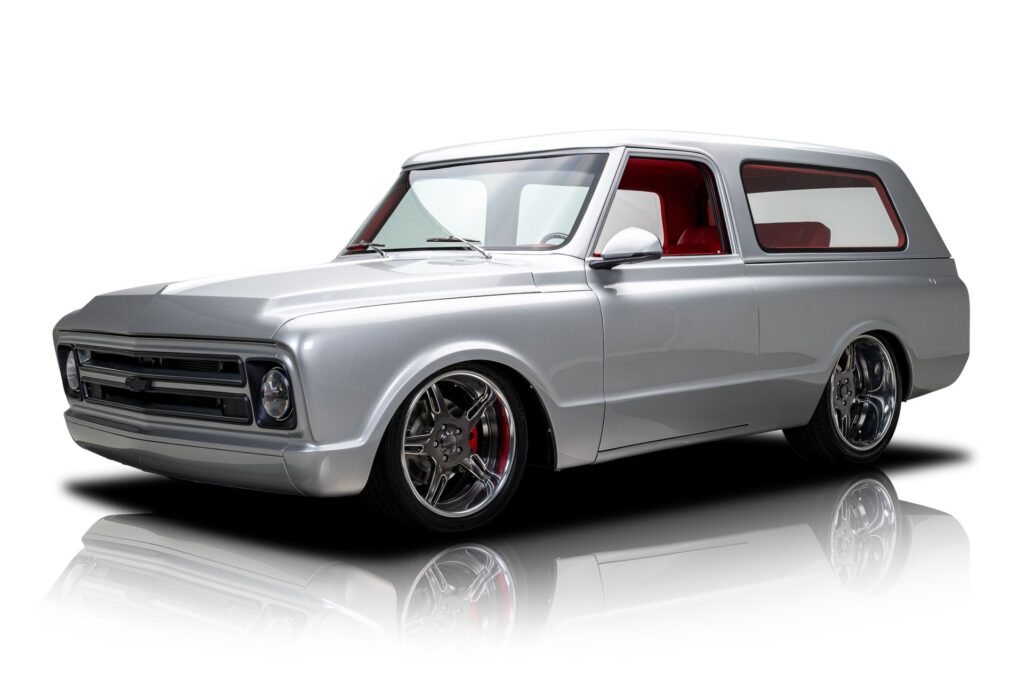
The 1972 Chevrolet Blazer takes a different approach, illustrating how customization can redefine a platform’s identity while maintaining its core appeal. Once regarded primarily as a utilitarian vehicle, the first-generation Blazer has evolved into a canvas for high-end builds that emphasize both style and performance.
This example departs from traditional off-road configurations, instead adopting a lowered, street-focused stance supported by a fully independent C4 Corvette suspension system. Power is provided by a 6.0-liter LS2 V8 paired with a six-speed automatic transmission, delivering performance consistent with modern standards.
The level of fabrication is evident throughout the vehicle. Custom body modifications, flush-mounted glass, and integrated lighting systems create a clean, cohesive exterior. Inside, a fully reworked cabin with custom upholstery, modern instrumentation, and integrated technology reflects the same attention to detail.
What distinguishes this Blazer is its versatility. It is equally suited to display, cruising, or performance driving, offering a level of adaptability that aligns with the expectations of today’s collector.
A Shift in Ownership Philosophy
The common thread across these vehicles is not simply their level of execution, but the intent behind them. They are built to be used. They are designed to deliver consistent performance, comfort, and reliability in real-world conditions. And they reflect a broader shift in how collectors define value.
For this new generation of buyers, ownership is not measured solely by rarity or originality. It is measured by the experience the car provides. The ability to drive without hesitation, to engage with the vehicle across different environments, and to enjoy it without the limitations often associated with vintage platforms has become a defining factor.
This does not diminish the importance of preservation within the collector car market. Original, numbers-matching vehicles continue to hold significant value and historical importance. However, the rise of the “drive it” collector has expanded the definition of what a desirable car can be.
The New Standard
At the highest level, these vehicles are no longer viewed as alternatives to traditional classics. They represent a parallel category, defined by engineering, craftsmanship, and usability. The best examples are evaluated not by how closely they replicate the past, but by how effectively they translate it into the present.
The Mustang, Bronco, and Blazer each demonstrate a different interpretation of that philosophy. Together, they illustrate a market that is no longer confined to preservation alone, but increasingly driven by experience.
For today’s collector, the question is no longer whether a car should be driven. It is how well it can be.